By Dr Yonas Workineh
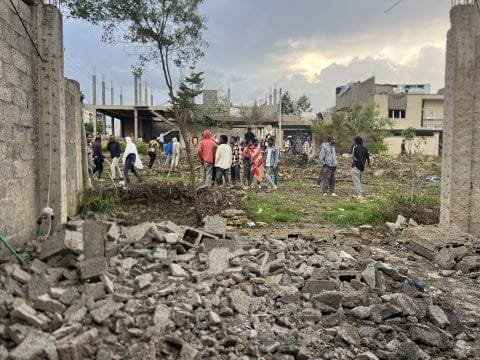
In the heart of Sudan, a slow-motion tragedy is unfolding. The once-bustling city of El Fasher, North Darfur’s capital, has become the epicenter of a brutal power struggle between the Sudanese Armed Forces (SAF) and the Rapid Support Forces (RSF). Streets once filled with children and traders now echo with gunfire, and families shelter in collapsed homes as aid runs dry.
The conflict, which erupted in April 2023, began as a political power struggle between General Abdel Fattah al-Burhan, head of the SAF, and General Mohamed Hamdan Dagalo (“Hemedti”), commander of the RSF.
What started as a rivalry over control of the army quickly escalated into one of the world’s worrying humanitarian crises.
Today, entire cities lie in ruins, and millions of civilians are paying the price of a war they never chose.
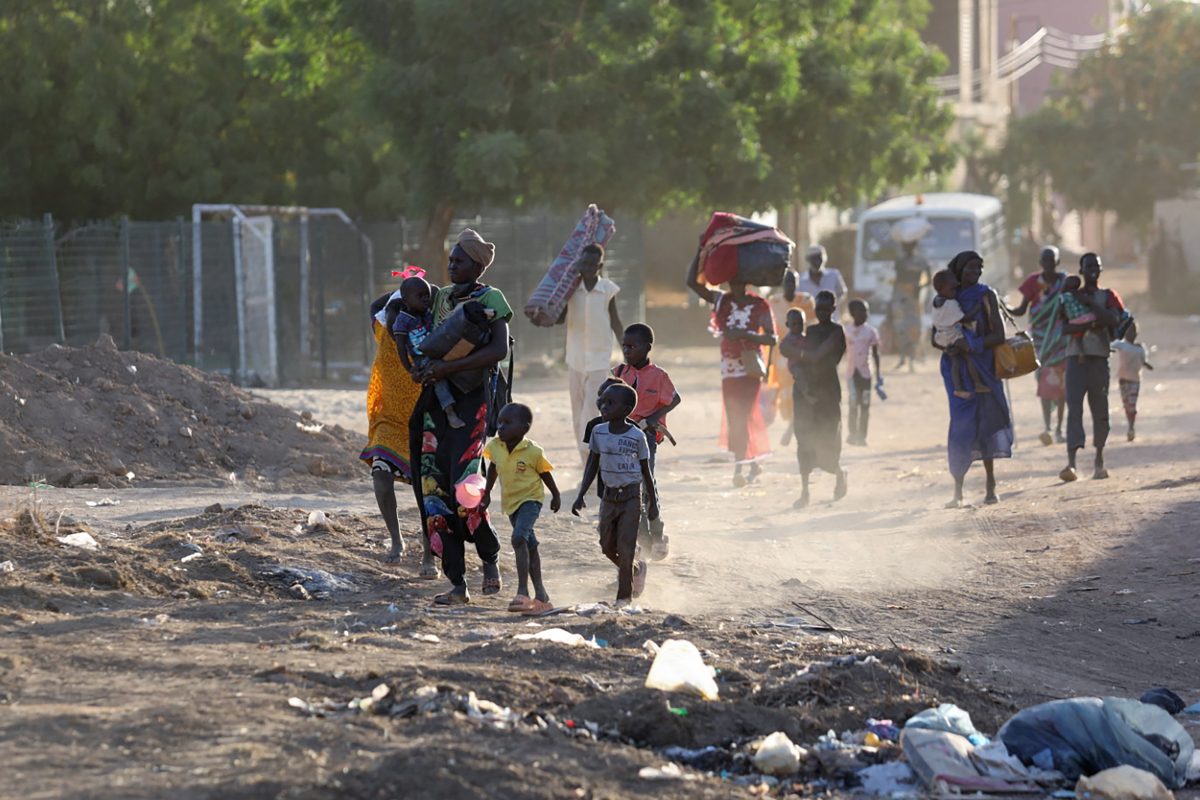
The United Nations estimates that more than 18,000 people have been killed since the start of the conflict in April 2023 up to around mid‑2025 and 14 million displaced, with nearly half of Sudan’s population in urgent need of food and medical assistance.
Inside El Fasher, residents describe scenes of horror. Hospitals have run out of anesthetics and basic medications.
Mothers cradle malnourished children under makeshift tents. Civilians who attempt to flee risk being shot by snipers or caught in crossfire.
“We have no bread, no medicine, and no light,” said Fatima, a mother of four hiding in a school compound turned shelter.
“We hear bombs all night. Every morning we count who survived.”
Across Darfur, the pattern is the same: ethnic violence, mass displacement, and the collapse of public services.
In West Darfur, human rights monitors have reported targeted killings along ethnic lines, recalling the dark days of Sudan’s earlier Darfur conflict in the 2000s.
Casualties in September 2025
September was particularly deadly. The UN reports that across Sudan, thousands of civilians were killed in the ongoing fighting, though exact numbers remain unclear due to access restrictions.
Among the most deadly incidents was a drone strike on a mosque in El Fasher on 19 September, which reportedly killed more than 70 civilians.
“The dead are piling up, and families have nowhere to bury their loved ones safely,” said a local aid worker in El Fasher. “Every day, more civilians fall victim to indiscriminate attacks.”
The Viral Story of a Mother on Social Media
Recently, a story circulating on social media depicted a mother with three children begging for their lives in war-torn Sudan.
While the image and story spread widely, verification has been difficult. Major agencies have not confirmed the identities or outcome.
Nevertheless, whether verified or not, such stories reflect the real danger faced by civilians, particularly women and children, who are trapped between warring factions.
“Even if we don’t know their names, their faces are every mother in Darfur,” said a humanitarian worker in a refugee camp near the Chad border. “Every day, mothers risk everything to protect their children.”
As war grinds on, hunger has become another weapon. Farmers have abandoned their land, markets have closed, and fuel shortages cripple aid delivery.
According to the World Food Programme, more than 6 million Sudanese are on the brink of starvation.
In displacement camps, children die quietly from preventable diseases, while humanitarian convoys are repeatedly looted or blocked by warring factions.
“We’re not dying only from bullets,” said a displaced teacher near Nyala. “We’re dying from hunger and silence.”
Despite repeated appeals, international efforts have made little impact.
The UN Security Council remains divided, and several cease-fire attempts have collapsed within days. Regional mediations by the African Union and IGAD have yet to secure a lasting truce.
Aid agencies warn that Sudan’s war risks spilling into neighboring Chad, South Sudan, and Ethiopia, where hundreds of thousands of refugees are already arriving daily.
While the war is often framed as a battle between two generals, its roots are also ethnic and economic.
The RSF draws heavily from Arab tribes in Darfur and the Sahel, while the SAF is dominated by officers from northern riverine communities. Both factions compete for control of Sudan’s natural wealth—especially gold, which has become the RSF’s main source of funding.
The conflict has exposed the fragility of Sudan’s governance: decades of militarized politics, underdevelopment in peripheral regions, and the failure to hold previous perpetrators accountable have created a fertile ground for recurring cycles of violence.
Nearly two years into the conflict, Sudan’s crisis remains one of the least visible wars in the world. With foreign media blocked and internet services disrupted, countless stories of survival and loss go unheard.
“The world sees Gaza and Ukraine,” said a community volunteer from Darfur. “But Sudan bleeds in silence.”
As the fighting spreads and the humanitarian corridor narrows, millions of Sudanese continue to wait — not just for aid, but for the world to notice.