By RANIA H.
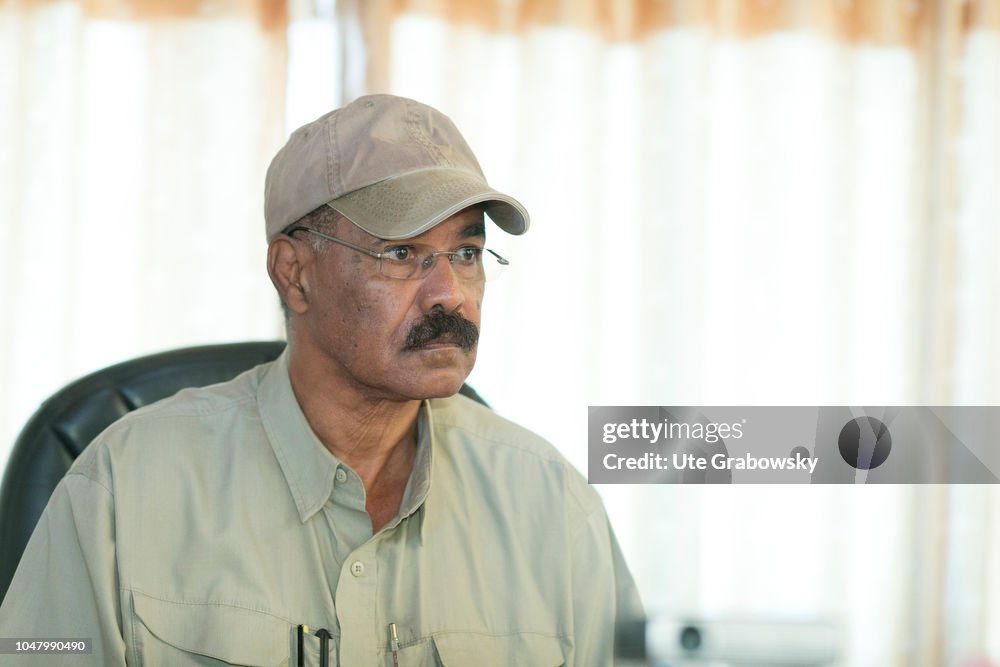
Eritrean President Isaias Afwerki on Monday accused Ethiopia of effectively declaring war on Eritrea, sharply escalating rhetoric between the two neighbors and rejecting claims that the dispute is driven by Addis Ababa’s desire for access to the Red Sea.
Speaking in an interview broadcast on Eritrean state television, President Isaias dismissed narratives portraying the tensions as a maritime or port-access dispute, insisting that Eritrea harbors no ambition related to Red Sea control.
“For us, it is not directly about the Red Sea,” Isaias said, countering assertions frequently raised by Ethiopian officials and regional analysts.
Instead, the Eritrean leader framed the standoff as part of a broader militarized agenda pursued by Ethiopia’s ruling Prosperity Party, accusing it of sustaining conflict across multiple regions despite the signing of the Pretoria peace agreement in November 2022.
“After the Pretoria Agreement, war was declared in Amhara Region to destroy FANO, on Tigray, Afar, Oromia, Somalia,” Isaias said, alleging that Ethiopia remains locked in a cycle of internal wars rather than genuine post-conflict stabilization.
He further claimed that these conflicts are not solely driven by Ethiopia’s leadership, but by unnamed external actors.
“This game is not the agenda of Prosperity. This is the agenda of others those who are funding it, those who are giving their money,” he added.
Red Sea Access: Symbol or Strategic Pressure?
Ethiopia’s renewed emphasis on Red Sea access has become one of the most contentious issues in the Horn of Africa.
Prime Minister Abiy Ahmed has repeatedly argued that Ethiopia’s landlocked status is an “existential challenge,” prompting speculation that Addis Ababa may seek leverage over neighboring coastal states, including Eritrea, Djibouti, and Somalia.
While Ethiopian officials have at times framed the issue in economic and diplomatic terms, critics warn that such rhetoric risks militarizing regional relations.
President Isaias’s remarks appear aimed at dismantling the legitimacy of that argument, portraying it instead as a diversion from Ethiopia’s domestic instability.
Analysts note that Eritrea, which fought a devastating 1998–2000 border war with Ethiopia, remains deeply skeptical of Ethiopian political intentions, particularly after the rapid deterioration of the post-2018 rapprochement that once united Isaias and Abiy.
Pretoria Agreement Under Strain
Isaias’s comments also cast doubt on the durability of the Pretoria Agreement, which formally ended the two-year war between Ethiopia’s federal government and the Tigray People’s Liberation Front (TPLF).
Although large-scale fighting in Tigray has subsided, insecurity persists in Amhara and Oromia regions, where federal forces are battling armed groups, including FANO militias and the Oromo Liberation Army.
Eritrea, a key ally of Addis Ababa during the Tigray war, has since grown increasingly distant from Ethiopia’s federal leadership.
Diplomatic engagement between Asmara and Addis Ababa has cooled, and there are signs of military repositioning on both sides of the border, fueling concerns of renewed confrontation.
Regional Implications
The escalating rhetoric comes at a time of heightened fragility across the Horn of Africa, with conflicts in Sudan, Somalia, and Ethiopia intersecting with geopolitical competition involving Gulf states, Western powers, and emerging actors.
Observers warn that a breakdown in Eritrea-Ethiopia relations would have serious consequences for regional stability, trade routes, and humanitarian conditions, particularly given Ethiopia’s internal volatility and Eritrea’s highly militarized state structure.
For now, neither government has formally declared hostilities.
However, President Isaias’s accusation that Ethiopia has already “declared war” underscores the depth of mistrust and raises fears that diplomatic channels may be narrowing.
As regional actors and international partners urge restraint, the Horn of Africa once again faces the risk that unresolved grievances, competing narratives, and militarized politics could tip an already fragile region into another cycle of conflict.