By Gedam Afework
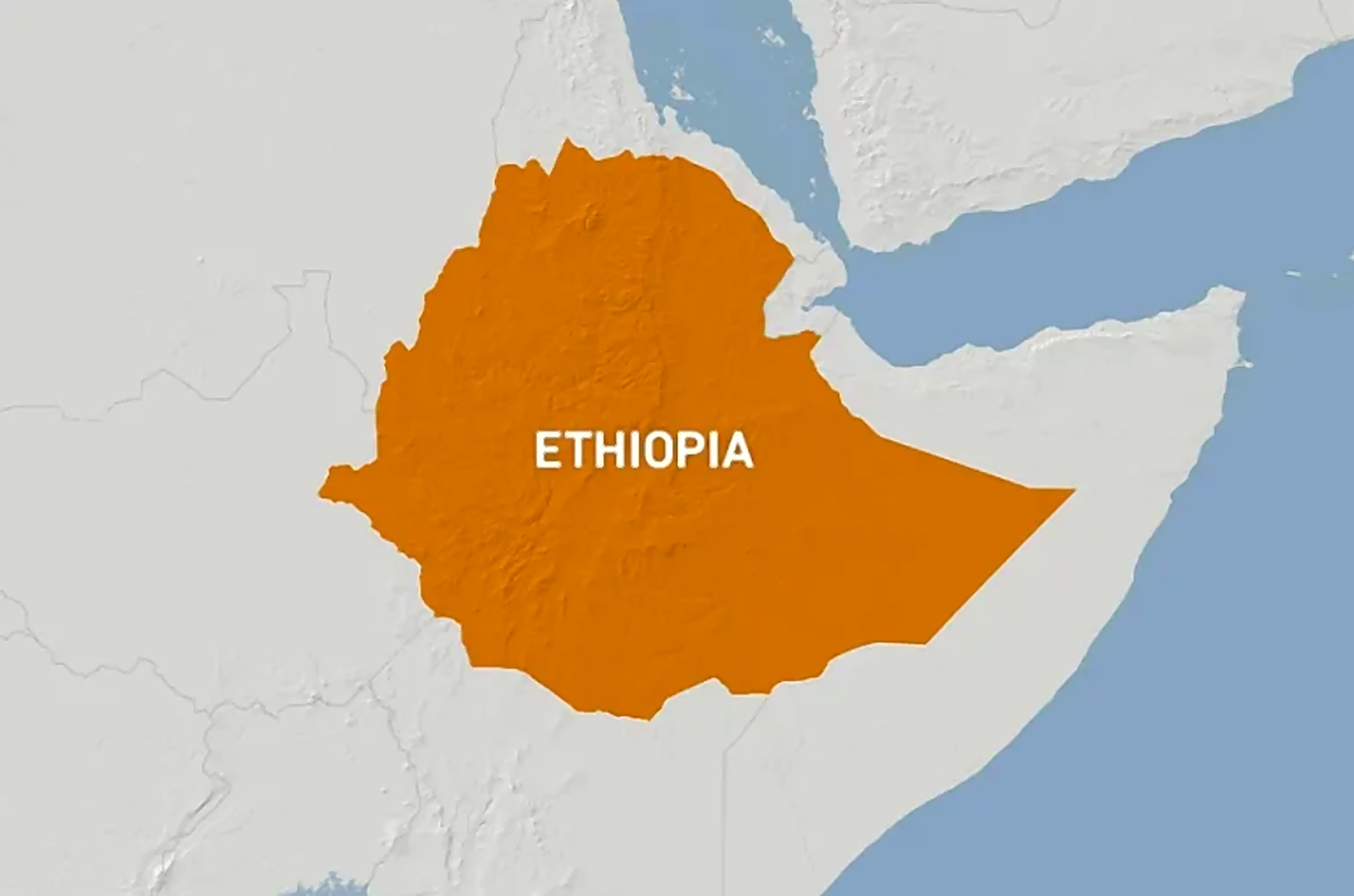
Ethiopia is once again becoming a country where civilians cannot be certain that they will survive the night.
The sound of gunfire, artillery and drones has become an increasingly familiar reality. Civilians are being displaced repeatedly, hospitals are struggling to cope with casualties, children are growing up surrounded by violence, and communities that once hoped for peace are facing the possibility of another devastating war.
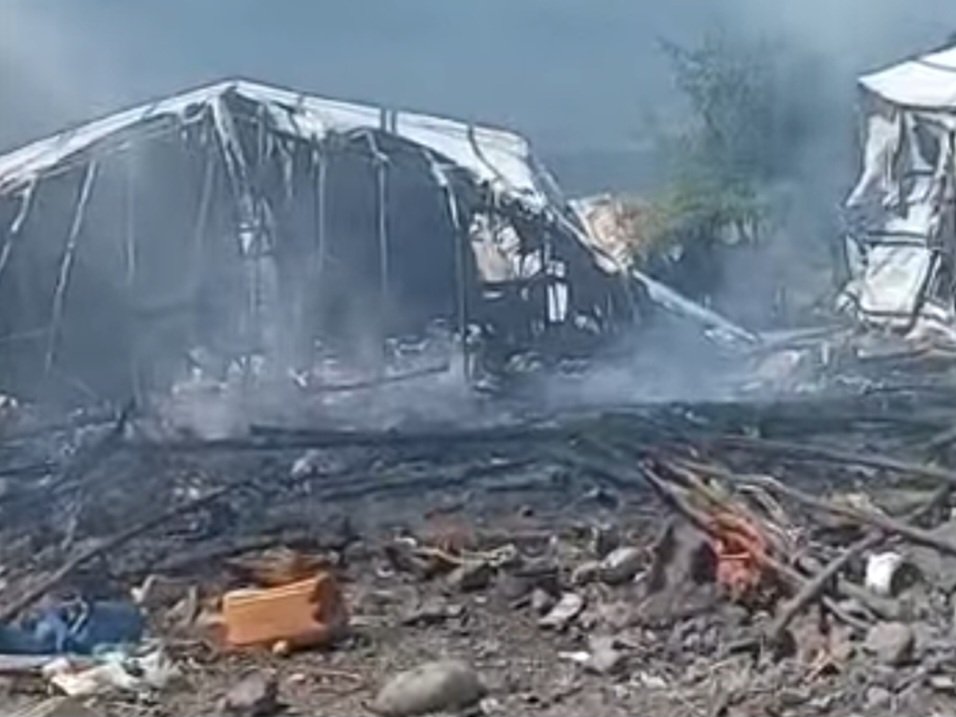
On October 29, 2026, a series of drone strikes hit the Hayiq Jari 2 Turk internally displaced persons camp in Ethiopia’s Amhara region.
At least 15 people were killed, including five children, according to sources involved in rescue operations who spoke to The East African Daily. Other local reports identified pregnant women and an eight-year-old girl among the victims. Dozens of people were injured, and shelters were reportedly destroyed by fire.
The camp was home to more than 1,700 people who had already fled violence and sought refuge from the destruction of their communities.
According to witnesses, several explosions struck the camp while displaced families were inside their shelters. There were reportedly no active clashes in the immediate area when the attack occurred.
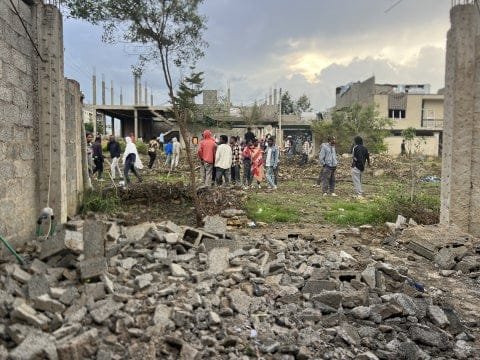
Barely a day later, another devastating incident was reported in Rama, in the Tigray region. On the morning of October 30, civilians reportedly gathered to collect sorghum scattered from a private vehicle that had been struck by a drone the previous evening.
A second drone attack hit the gathering, killing at least 11 people, according to a medical source cited by The Abay Time. Other local accounts put the death toll at 14 to 15.
The question confronting Ethiopia is increasingly difficult to avoid: How did a country that was promised peace and democratic transformation under a Nobel Peace Laureate become trapped in successive cycles of armed conflict?
The Nobel Peace Prize and the collapse of Ethiopia’s promise of peace
When Abiy Ahmed became Ethiopia’s prime minister in April 2018, he was welcomed by many Ethiopians as a potential architect of national reconciliation.
His early political reforms, the release of political prisoners, the return of exiled opposition figures and the rapprochement with neighbouring Eritrea created widespread expectations that Ethiopia was entering a new political era.
In 2019, Abiy received the Nobel Peace Prize for his efforts to achieve peace and international cooperation, particularly his role in ending the longstanding conflict between Ethiopia and Eritrea.
But that promise did not last. Instead of consolidating democratic institutions and building an inclusive political settlement, the country descended into one of the deadliest conflicts in modern African history.
Political disagreements increasingly became military confrontations, and the promise of national reconciliation was overshadowed by mass violence, displacement and allegations of grave human rights violations.
The contradiction between Abiy Ahmed’s international recognition as a Nobel Peace Laureate and the suffering experienced by millions of Ethiopians has become one of the defining political questions of his leadership.
A Nobel Peace Prize is recognition of particular achievements, not permanent immunity from scrutiny. It cannot shield a government from accountability for its subsequent actions or the consequences of its policies.
The Tigray war: A national catastrophe that claimed hundreds of thousands of lives
On November 4, 2020, Ethiopia entered a devastating war after the federal government launched a military offensive against the Tigray People’s Liberation Front (TPLF), following months of escalating political and military tensions.
What was initially presented as a limited military operation rapidly developed into a full-scale war involving Ethiopian federal forces, Eritrean troops, Amhara regional forces and allied militias against Tigrayan forces.
For nearly two years, Tigray became the centre of a humanitarian catastrophe.
The conflict was marked by massacres, widespread sexual violence, mass displacement, destruction of civilian infrastructure, arbitrary detention, restrictions on humanitarian assistance and the collapse of essential public services.
Eritrean troops also became directly involved in the conflict, committing serious war crimes against civilians according to international human rights investigations.
The human cost was extraordinary.
Estimates indicate that hundreds of thousands of people lost their lives, including those who died from direct violence, starvation, preventable diseases and the collapse of healthcare services.
A study led by Professor Jan Nyssen of Ghent University estimated approximately 518,000 civilian deaths in Tigray by December 2022, with a possible range of 311,000 to 808,000. The study attributed a substantial proportion of deaths to famine and the collapse of healthcare.
The figure of approximately 600,000 deaths has also been cited in international discussions, including by former African Union envoy Olusegun Obasanjo.
International investigations documented grave rights violations
The atrocities committed during the Tigray war were not merely accusations exchanged between political opponents. In November 2021, the Ethiopian Human Rights Commission and the United Nations Office of the High Commissioner for Human Rights published a joint investigation into alleged violations committed by all parties to the conflict.
The investigation found reasonable grounds to believe that serious violations of international human rights, humanitarian and refugee law had occurred. Some of these violations constitute war crimes and crimes against humanity.
The documented abuses included unlawful killings, extrajudicial executions, torture, sexual violence, arbitrary detention, forced displacement and violations against refugees.
Amnesty International subsequently published an investigation in April 2022 documenting crimes against humanity and ethnic cleansing in Western Tigray. Its findings described the systematic expulsion of Tigrayan civilians through killings, sexual violence, arbitrary detention, pillage and forced transfers. The allegations of genocide also deserve serious attention.
In 2024, the New Lines Institute for Strategy and Policy published a legal analysis arguing that there were reasonable grounds to believe that war crime acts committed by Ethiopian federal forces, Amhara regional forces and Eritrean forces against Tigrayans could constitute genocide.
The most disturbing aspect of the aftermath is that the end of large-scale fighting did not produce the comprehensive accountability and reconciliation necessary to prevent further atrocities.
The Pretoria Agreement: Peace without a comprehensive political settlement
In November 2022, the Ethiopian federal government and the TPLF signed the Pretoria Agreement, ending large-scale hostilities between the principal parties. The agreement was an important diplomatic achievement, but it was not a comprehensive solution to Ethiopia’s underlying political crisis. Questions surrounding the return of displaced people, territorial disputes, the withdrawal of foreign forces, disarmament, reconstruction and accountability remained unresolved.
Millions of displaced people continued to face uncertainty about returning to their homes. Communities that had experienced atrocities continued to demand justice, while political disagreements over the future of Tigray remained unresolved.
The agreement also did not include every armed actor involved in the war. Instead of using the opportunity to establish an inclusive national reconciliation process, Ethiopia witnessed the emergence of new confrontations. The country had ended one major war without resolving the political conditions that made another possible.
Amhara: Another region engulfed in federal military operations
In April 2023, the federal government’s plans to reorganize regional special forces and integrate them into other security structures triggered strong resistance among sections of the Amhara region.
The resulting confrontation between federal forces and Fano militias escalated into a major armed conflict in August 2023. Since then, the Amhara region has experienced sustained military operations, aerial attacks, drone strikes, civilian casualties and mass displacement.
The consequences have been devastating. Residents have been forced to abandon their homes, schools have been disrupted, economic activities have been severely affected, and hospitals have struggled to operate under increasingly difficult conditions. The conflict has also generated serious allegations of human rights violations by different armed actors.
Under international humanitarian law, civilians and civilian objects must be protected. Parties to a conflict must distinguish between military targets and civilian populations, take feasible precautions and avoid disproportionate attacks.
If an investigation establishes that the camp was deliberately targeted, or that the attack was indiscriminate or disproportionate, those responsible could face allegations of serious violations, potentially including war crimes. The international community cannot afford to treat such incidents as ordinary consequences of an internal conflict.
Tigray is once again experiencing the horrors of aerial warfare
Perhaps the most alarming development is the return of serious military confrontation to Tigray, a region that has barely recovered from the devastation of the previous war.
The November 2022 Pretoria Agreement was supposed to prevent a return to large-scale fighting. Yet political tensions, disagreements over the implementation of the agreement and renewed military mobilization have brought the region dangerously close to another catastrophe.
In September 2026, seven Ethiopian armed and political movements announced the formation of the Ethiopian Peoples’ Forces Alliance for Survival, declaring their intention to remove Abiy Ahmed’s government and establish an inclusive transitional administration.
The alliance brought together former adversaries, including the TPLF and Amhara Fano National Movement, alongside the Oromo Liberation Army and four other movements. The formation of this alliance was followed by renewed military confrontation beginning on September 23.
Federal forces subsequently regained territory, including Mekelle, which they retook in October, according to news reports. Nevertheless, the military situation remains volatile. The consequences for civilians have already been alarming.
Reports published by local media have documented drone attacks affecting displaced people in Shiraro, civilians in Adwa, and other communities across Tigray. In one particularly disturbing incident on October 4, a drone reportedly struck an internally displaced persons camp in Shiraro, killing nine people and injuring 14, including a days-old baby.
These incidents raise a fundamental question: How can a region that suffered so profoundly during the previous war be exposed to another cycle of aerial attacks and civilian deaths? Tigrayans who survived the first war should not have to live through another.
The formation of the Ethiopian Peoples’ Forces Alliance for Survival on September 20, 2026, represents one of the most significant political developments in Ethiopia’s recent history.
According to the alliance’s announcement, its membership includes the Amhara Fano National Movement, the TPLF, the Oromo Liberation Army, the Ogaden National Liberation Front, the Afar Revolutionary Democratic Unity Front, the Benishangul Peoples’ Liberation Movement and the Gumuz Peoples’ Democratic Movement.
The alliance declared its intention to remove the Prosperity Party-led government and establish a transitional political administration.
Its significance extends beyond the number of organizations involved. These movements have different historical experiences, political objectives and territorial interests. Some were previously on opposing sides of the Tigray war.
Their decision to establish a common political and military framework illustrates the extent to which opposition to Abiy Ahmed’s government has expanded across different parts of Ethiopia.
Their willingness to cooperate reflects a deepening crisis of political legitimacy and an increasingly fragmented security environment. However, the alliance should not automatically be understood as a unified political movement with a common vision for Ethiopia’s future.
Its members have different political demands, and the ability of these organizations to maintain a coherent coalition remains uncertain.
Nevertheless, the emergence of the alliance demonstrates that Ethiopia’s crisis is no longer confined to isolated regional conflicts. It is increasingly becoming a national confrontation involving multiple armed movements and competing political visions. The September offensive and subsequent federal military response have intensified the danger.
The people who will suffer most from this confrontation are not necessarily the political leaders or military commanders. They are the civilians living in the territories where these forces operate.
Oromia: Another unresolved conflict
While international attention has frequently focused on Tigray and Amhara, the conflict in Oromia has continued to devastate communities.
The federal government has been fighting the Oromo Liberation Army for years, with repeated reports of civilian deaths, displacement, arbitrary arrests and destruction of property. Communities in western and southern Oromia have experienced prolonged insecurity, with residents frequently caught between government forces and armed opposition groups.
The humanitarian consequences have been particularly severe for rural populations whose livelihoods depend on agriculture and access to local markets and healthcare. The conflict in Oromia is another indication that Ethiopia’s crisis cannot be resolved through military operations alone.
Political grievances, questions of representation, regional autonomy and public trust require political solutions. The continued reliance on armed force has instead contributed to an environment in which communities increasingly perceive the state as a source of insecurity rather than protection.
The danger of another regional war
Ethiopia’s internal instability is also creating serious risks for the wider Horn of Africa. Relations between Ethiopia and Eritrea have deteriorated amid disputes over security, regional influence and Ethiopia’s ambition to secure access to the Red Sea.
The renewed confrontation in Tigray is especially concerning because Eritrean forces were directly involved in the previous war. Any new confrontation involving Ethiopia and Eritrea could transform the current domestic crisis into a much wider regional conflict.
The involvement of different armed movements, the competing interests of neighbouring countries and the unresolved consequences of the previous war make the situation particularly dangerous.
The Horn of Africa cannot afford another large-scale conflict involving Ethiopia, one of the region’s most populous and strategically important countries.
The African Union, the United Nations, the European Union and Ethiopia’s international partners must recognize the urgency of the situation. The international response should go beyond expressions of concern.
The reported drone attacks in Rama and Hayiq require independent investigations. All parties must comply with international humanitarian law and protect civilians, humanitarian workers, hospitals, schools and displacement camps. Humanitarian organizations must be granted safe and unrestricted access to affected populations.
Allegations of war crimes, crimes against humanity, ethnic cleansing and genocide must be investigated through independent and credible mechanisms. Those responsible for serious violations must face accountability regardless of their political or military affiliation. Most importantly, Ethiopia needs a genuine and inclusive political dialogue that addresses the grievances of its different communities and armed movements. The country cannot be stabilized through military operations alone.
A sustainable political settlement must address constitutional disagreements, regional autonomy, territorial disputes, political representation, security-sector reform and the question of accountability for past atrocities. The international community must not wait until Ethiopia experiences another humanitarian disaster on the scale of the Tigray war before taking meaningful action.
Conclusion: Ethiopia cannot afford another war
Ethiopia has already paid an extraordinary price for political failures, military confrontation and the absence of meaningful accountability.
The Tigray war left hundreds of thousands of civilian deaths, millions displaced and communities devastated. The Pretoria Agreement created an opportunity to prevent a recurrence, but the subsequent conflicts in Amhara and Oromia, the emergence of a seven-group opposition alliance and the renewed confrontation in Tigray demonstrate how fragile that opportunity has become.
Ethiopia does not need another military victory followed by another fragile peace agreement. It does not need another generation of children growing up in refugee camps, another wave of mass displacement or another investigation documenting atrocities after thousands of lives have already been lost.
It needs leadership that understands the value of human life. It needs political reconciliation, independent institutions, accountability and a genuine commitment to protecting every citizen, regardless of ethnicity, region or political affiliation.
Abiy Ahmed was once celebrated internationally as a symbol of peace. Today, his administration must confront the profound contradiction between that international recognition and the reality of a country experiencing successive armed conflicts.
A nation cannot be built on the graves of its people. A government cannot claim to defend its country while its citizens continue to die in their homes, villages, hospitals and even in the displacement camps where they sought protection.
Ethiopia must not become a country where surviving one war merely means waiting for the next.
The people of Ethiopia deserve more than promises of peace. They deserve to live it. And the world must not look away while another generation is buried beneath the ruins of a country that once hoped for a different future.