By TESFA-ALEM TEKLE
Ehiopia’s latest announcement that it has taken delivery of advanced Russian fighter jets has raised serious questions about the government’s security priorities, particularly as communities across the country continue to suffer deadly attacks, displacement and persistent insecurity.
On Wednesday, Prime Minister Abiy Ahmed announced that Ethiopia had received Russian-made Sukhoi Su-35 fighter jets and would also acquire four batteries of the S-400 air defence system from Moscow.
The prime minister described the acquisition as a major milestone in strengthening the country’s military capabilities, saying it would enhance Ethiopia’s ability to deter external aggression.
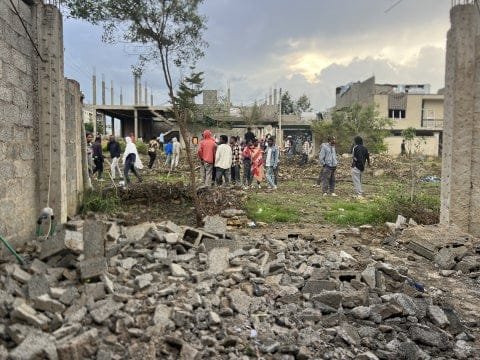
However, the announcement comes against the backdrop of another disturbing development: the reported killing of at least 60 Ethiopian Orthodox Christians in two separate attacks in the Oromia region within the space of four days.
According to the Ethiopian Orthodox Tewahedo Church, 14 people were killed in Merti district on October 20, while another 46 were killed in Shirka district on October 24. More than 20 people were reportedly seriously injured, and approximately 20 homes were burned.
The church described the incidents as brutal massacres and called on the government to take immediate action to protect civilians and bring those responsible to justice.
The two developments have brought renewed attention to a fundamental question facing Ethiopia: what does military strength mean when the state continues to struggle to protect its own citizens from violence within its borders?
Billions in military ambitions, unanswered questions about civilian protection
The Ethiopian government’s acquisition of sophisticated fighter aircraft represents a significant expansion of its military capabilities. Yet the financial terms of the agreement with Russia have not been publicly disclosed.
Prime Minister Abiy said Ethiopia had secured an agreement for 12 Su-35 fighter jets and thanked Russian President Vladimir Putin for facilitating their delivery ahead of schedule. However, Russia’s state-owned arms exporter Rosoboronexport told Reuters that the first delivery consisted of two aircraft.
The remaining delivery schedule and total cost of the agreement have not been made public.
The planned acquisition of four S-400 air defence batteries further demonstrates the government’s ambition to strengthen its military infrastructure.
The government argues that such investments are necessary to defend national sovereignty and respond to external security threats. Ethiopia faces complex regional security challenges, including rising tensions with Eritrea and renewed fighting in northern Ethiopia.
Nevertheless, external threats cannot be the only measure of national security.
For millions of Ethiopians living in conflict-affected communities, security is not measured by the number of fighter jets in the country’s air force. It is measured by whether they can sleep safely in their homes, travel without fear of attack, attend religious services and send their children to school without facing violence.
The repeated inability of authorities to prevent deadly attacks against civilians raises serious questions about the effectiveness of existing security arrangements and the government’s broader approach to protecting the population.
Christian communities face recurring attacks
The latest killings in Arsi Zone have intensified concerns among Ethiopia’s Orthodox Christian communities, which have repeatedly reported attacks, destruction of property and displacement.
The Ethiopian Orthodox Tewahedo Church has called for stronger government intervention, demanding that federal and regional authorities take responsibility for protecting religious communities.
Oromia regional government spokesperson Hailu Adugna blamed the Oromo Liberation Army (OLA) for the latest attacks, alleging that the group sought to provoke ethnic and religious tensions. However, the allegations have not been independently established, and the OLA did not immediately respond to requests for comment.
The competing accusations surrounding the attacks highlight the difficulties of establishing responsibility in Ethiopia’s conflict-affected areas, where insecurity, restrictions on reporting and limited independent access frequently obstruct investigations.
Regardless of the identity of the perpetrators, the government has a constitutional and legal responsibility to protect civilians, investigate attacks and ensure that those responsible are held accountable.
The failure to prevent repeated killings cannot simply be addressed through statements of condemnation after lives have already been lost.
Military expansion cannot replace domestic security
Ethiopia’s security challenges extend well beyond Oromia. The country continues to experience armed conflict and political instability in several regions, including Amhara and Tigray.
Renewed fighting in northern Ethiopia has raised fears of another devastating confrontation, while tensions with neighbouring Eritrea have added another dimension to the country’s already fragile security environment.
The previous war in northern Ethiopia, fought between 2020 and 2022, resulted in catastrophic civilian suffering, mass displacement and widespread allegations of serious human rights violations.
Against this background, the government’s military modernization programme raises important questions about the balance between external defence and domestic security.
Advanced fighter jets and sophisticated air defence systems may strengthen a country’s capacity to defend its airspace. They cannot, however, independently address the political, institutional and security failures that allow armed violence against civilians to persist.
Nor can military superiority substitute for accountable security institutions, effective policing, functioning judicial systems and meaningful political dialogue.
There is also a question of public accountability. At a time when many Ethiopians face displacement, economic hardship and insecurity, the government should provide greater transparency about the financial costs of major military acquisitions and explain how such spending fits into its wider national priorities.
Where is the government’s responsibility?
The Ethiopian government’s emphasis on military modernization stands in contrast to the urgent demands of communities seeking protection from attacks.
The question is not whether Ethiopia has a legitimate right to defend its sovereignty or modernize its armed forces. Every state has a responsibility to protect its territorial integrity and respond to genuine external threats.
The more pressing question is whether the government is giving sufficient attention and resources to the immediate security needs of its population.
When dozens of civilians are reportedly killed in separate attacks within days, when communities continue to face displacement and when perpetrators remain unidentified or unaccountable, military acquisitions alone cannot be presented as evidence of improved national security.
The government must explain why repeated attacks continue to occur, what measures are being taken to prevent further killings and whether security forces have been adequately deployed to protect vulnerable communities.
It must also ensure independent investigations into the recent attacks in Oromia, establish the identities of those responsible and provide justice for victims and their families.
A country needs more than fighter jets
Ethiopia is a country confronting multiple security crises, and its citizens need protection from both external aggression and internal violence.
The acquisition of Russian fighter jets may represent an important development for the Ethiopian military. But for families mourning relatives killed in Oromia, communities displaced by armed conflict and civilians living under constant insecurity, the announcement offers little immediate reassurance.
A government cannot measure national security solely through military hardware, defence agreements or the strength of its armed forces.
True national security must also be reflected in the protection of human life, the safety of religious and ethnic communities, respect for fundamental rights and the government’s ability to prevent violence within its own borders.
The arrival of advanced fighter jets may strengthen Ethiopia’s military arsenal. Whether the government can translate its expanding military capabilities into meaningful protection for its citizens remains a far more urgent test of its national security policy.