By Hana-Mariam Teshome
For more than two decades, Ethiopia was presented as one of Africa’s promising destinations for manufacturing investment.
The country’s industrialization strategy, pursued during the former ruling party, Ethiopian People’s Revolutionary Democratic Front (EPRDF) era, was built around a clear economic ambition: move millions of people from low-productivity agriculture into modern manufacturing, increase exports, attract foreign investment and aimed to transform Ethiopia into a major industrial hub.
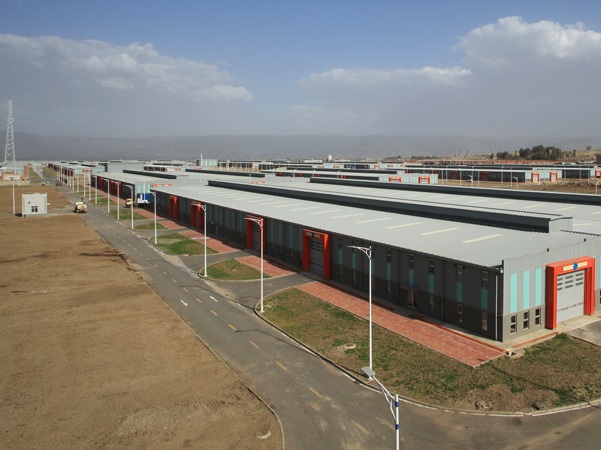
Billions of Ethiopian birr were invested in industrial parks across Ethiopia. Among others, Hawassa, Bole Lemi, Mekelle, Kombolcha, Adama and Dire Dawa became symbols of Ethiopia’s attempt to enter global manufacturing supply chains.
These industrial parks attracted international textile, garment, leather and footwear manufacturers that viewed Ethiopia as a competitive production location because of its young workforce, relatively low labor costs, government incentives and preferential access to international markets.
Hawassa Industrial Park alone became the flagship example. The facility was designed to host textile and garment manufacturers and was projected to employ about 60,000 workers at full capacity while generating up to US$1 billion in annual export revenue.
Among the companies connected to Ethiopia’s apparel ambitions were suppliers producing for internationally recognized brands, including PVH Corporation, the parent company of Tommy Hilfiger and Calvin Klein.
These investments represented Ethiopia’s attempt to integrate into global manufacturing networks.
The economic impact extended beyond factory gates. Industrial parks created demand for transportation companies, food suppliers, construction firms, logistics providers, maintenance businesses and financial services.
Thousands of small enterprises benefited from the growth of industrial zones.
For many young Ethiopians, particularly women, factory employment represented their first opportunity to enter the formal labor market.
However, under PM Abiy Ahmed, Ethiopia’s manufacturing ambitions have faced severe setbacks in recent years.
From Industrial Ambition to Economic Uncertainty
Today, Ethiopia’s manufacturing sector is under pressure from a combination of domestic and international challenges.
The problems cannot be attributed to a single cause. Instead, conflict, foreign exchange shortages, inflation, logistics difficulties, trade disruptions and investor uncertainty have combined to weaken industrial competitiveness.
The northern Ethiopia conflict created one of the most serious shocks to the investment environment.
Beyond its humanitarian consequences, the conflict damaged infrastructure, disrupted transportation networks and increased uncertainty for businesses planning long-term investments.
Manufacturing investors typically make decisions based on stability over decades, not short-term opportunities. When political and security risks increase, companies often delay expansion, reduce production or reconsider future investments.
At the same time, manufacturers have struggled with foreign exchange shortages. Factories that depend on imported machinery, spare parts, chemicals, fabrics and other production inputs require reliable access to foreign currency. When businesses cannot obtain foreign exchange easily, production becomes more expensive and less competitive.
The result is a difficult economic cycle: lower production reduces exports, lower exports reduce foreign currency earnings, and limited foreign currency makes industrial production even more difficult.
Ethiopia’s apparel industry also suffered from the suspension of its eligibility under the African Growth and Opportunity Act (AGOA), which had allowed many Ethiopian exports duty-free access to the United States market.
For an export-oriented manufacturing sector built around global supply chains, losing preferential access created a major competitive disadvantage. Research on Ethiopia’s textile, apparel and leather sectors found that the AGOA suspension significantly reduced export performance, particularly in textiles and apparel.
As a result, some international manufacturers reduced operations, suspended production or reconsidered Ethiopia as a sourcing destination.
These decisions were influenced by multiple factors: conflict risks, market access challenges, foreign exchange shortages, rising production costs and uncertainty about the future business environment.
For businesses considering investments worth hundreds of millions of dollars, predictability matters. Companies want confidence that exchange-rate policies, investment regulations, taxation systems and business rules will remain stable over time.
A country can build industrial parks, roads and factories, but without strong institutions and predictable economic management, attracting long-term investment becomes more difficult.
Industrial Parks Versus Recreational Development: A False Choice?
The debate surrounding Ethiopia’s development priorities has intensified as the government invests heavily in urban beautification, recreational parks and tourism-related projects.
These projects have produced visible changes in Addis Ababa and other cities. They have created public spaces, improved urban environments and supported tourism ambitions.
However, the central economic question is whether these investments are complementing or replacing the productive industries needed to address Ethiopia’s biggest economic challenges: unemployment, foreign exchange shortages and limited export earnings.
Recreational infrastructure can improve quality of life. But manufacturing creates a different type of economic value.
Factories generate exports, foreign currency, technology transfer, industrial skills and large-scale employment. Manufacturing jobs also support wider economic ecosystems involving transportation, housing, agriculture, banking and local businesses.
For a country, second most populace in Africa and with a rapidly growing youth population, employment creation remains one of the most urgent economic priorities.
The Cost of Losing Industrial Momentum
However, dependence on commodities exposes the economy to global price fluctuations.
Industrialization was intended to reduce that vulnerability by allowing Ethiopia to export higher-value manufactured goods.
The loss of momentum therefore represents more than a factory problem. It affects Ethiopia’s broader economic transformation strategy.
The Road Ahead: Rebuilding Confidence
Ethiopia still retains many advantages that originally attracted manufacturers: a large young workforce, agricultural resources, strategic location and experience gained from industrial park development.
But restoring manufacturing growth will require more than new factories.
It will require lasting peace and security, predictable economic policies,stronger institutions, improved foreign exchange availability, reliable infrastructure.
The lesson from successful industrial economies is that economic transformation requires balance. Urban development and public spaces matter, but productive industries provide the economic foundation that allows societies to sustain those improvements.
Ethiopia’s future may not depend on choosing between beautiful cities and industrial factories. It depends on whether the country can build an economy where both can grow together.
The factories that once represented Ethiopia’s industrial dream created jobs, exports and global connections. Restoring that momentum may determine whether the country achieves its long-promised transformation or loses another decade of economic opportunity.