By Ephrem B Hidug
When the Ethiopian federal army suffers a catastrophic defeat at the town of Shererina, Prime Minister Abiy Ahmed faces an existential crisis. The defeat is not just a military loss; it is a propaganda nightmare that exposes the fragility of his “unity through force” doctrine.
Introduction: The Unraveling of a Narrative
On August 1, 2026, the Ethiopian government’s carefully constructed narrative about the Tigray People’s Liberation Front (TPLF), the Tigray Defense Forces (TDF), and the broader conflict in Ethiopia’s northern region was put to the test at Shererina, a location in western Tigray bordering Sudan.
The outcome was not merely a military setback; it was a profound unraveling of a political strategy that has been years in the making, exposing the fundamental miscalculations that have brought the ancient nation of Ethiopia to the precipice of fragmentation.
This viewpoint argues that the Shererina engagement represents a critical inflection point in Ethiopia’s ongoing crisis.
The Ethiopian government’s decision to attack TDF forces in this location was not a spontaneous military operation but the culmination of a multi-phase strategy designed to weaken the TPLF, fracture the TDF, and force the Tigrayan population into submission. The failure of this operation has fundamentally altered the strategic calculus, revealing that the federal government’s military and political assumptions were not merely flawed but dangerously detached from reality.
The consequences of this miscalculation will reverberate across the Horn of Africa, potentially reshaping the geopolitical landscape of the region.
The Architecture of the Federal Government’s Strategy
The Political Foundation: Abiy Ahmed’s Vision
To understand why the Shererina battle occurred, one must first comprehend the political vision driving Prime Minister Abiy Ahmed’s administration. Since coming to power in 2018, Abiy has articulated a vision for Ethiopia that fundamentally challenges the ethnic federalist system established by the Ethiopian People’s Revolutionary Democratic Front EPRDF in 1991.
His argument rests on the premise that ethnic federalism poses an existential threat to national unity and territorial integrity. In its place, he has advocated for a more centralized, unitary state structure reminiscent of the imperial and Derg regimes, albeit with a democratic veneer.
The political logic of this vision is rooted in demographic calculus. By consolidating support from Ethiopia’s two largest ethnic groups—the Oromo and the Amhara—Abiy believed he could secure political dominance for the foreseeable future.
This ORO-MARA coalition, as it came to be known, would provide the demographic weight necessary to reshape Ethiopia’s political map.
However, this strategy required a unifying threat, a common enemy that could justify the dismantling of the existing federal structure.
The First Phase: The 2020-2022 Tigray War: The first phase of this strategy culminated in the devastating Tigray war of 2020-2022.
Sources indicated that Federal forces, supported by Eritrean troops and various militia groups of Ethiopia, launched a full-scale assault on Tigray with the stated objective of dismantling the TPLF and its military wing. The war left hundreds of thousands dead, destroyed public and private infrastructure, and resulted in crimes against humanity, as documented by the UNHRC Commission of Inquiry (International Commission of Human Rights Experts on Ethiopia).
Yet, despite the overwhelming force arrayed against them, the TDF not only survived but demonstrated remarkable resilience. The war ended not with a military victory for the federal government but with the Pretoria Agreement on the Cessation of Hostilities—a negotiated settlement that left the fundamental issues unresolved. The TPLF and TDF looks weaker, and Tigrayan resistance had, if anything, looks more fragile.
The Second Phase: The Four-Year Strategy:
Following the Pretoria Agreement, the federal government adopted a more sophisticated, multi-pronged strategy. Rather than direct military confrontation, this second phase sought to achieve through political maneuvering, economic pressure, and internal subversion what the war had failed to accomplish.
Phase One: Internal Division of the TPLF: The first pillar of this strategy focused on fracturing the TPLF’s leadership. The federal government successfully cultivated a faction within the party, centered on Getachew Reda and Lieutenant General Tsadkan Gebretensae.
These leaders, appointed to the interim Tigray administration, began advocating for political reforms that aligned with the Prosperity Party’s vision. The resulting schism within the TPLF Central Committee created two rival factions, each claiming legitimacy.
The Reda-Tsadkan faction ultimately broke away and Getachew and his colleges in TPLF form a new political party, Tigray Democratic solidarity also called as “Semret”, and aligned itself with the federal government. Reda joined the federal cabinet, while Tsadkan formed “a Movement for Change in Tigray” the Tehary coalition and became a vocal critic of the TPLF on national media. This internal division was strategically vital to the federal government’s narrative: it could now portray the TPLF as a declining force, abandoned by its own leadership.
Phase Two: Military Weakening Through Proxy Forces: The second pillar was to split and weaken TDF. This plan involved the creation of the Tigray Peace Forces (TPF) in the Afar region. Composed of former TDF members who had been retrained and rearmed by the Ethiopian government, the TPF served both as a military counterweight to the TDF and a potent symbol of TDF fragmentation. The political wing of this force, led by Birgeder General Gebregziabher Beyne, who believed to be Tsadkan’s coalition, was positioned as a legitimate alternative to the Tigray politics and military.
Phase Three: Economic Encirclement and Propaganda: The third pillar consisted of maintaining an economic blockade on Tigray. Artificial shortages of goods, fuel, and basic necessities were sustained through federal government control of supply lines. The message to the Tigrayan population was clear: continued resistance would mean continued suffering.
Simultaneously, the federal government launched an intensive propaganda campaign. Former TPLF leaders were deployed to urge Tegaru to flee Tigray in anticipation of a devastating second war. The narrative was calculated to demoralize the population, erode support for the TPLF, and create an exodus that would weaken the region economically and militarily.
The Need for Proof: Substantiation through Force
For this strategy to succeed, however, the narrative needed to be substantiated with tangible proof. The Ethiopian government had to demonstrate—convincingly—that the TDF were no longer a capable fighting force and that the TPLF could no longer protect the Tigrayan people. This required a carefully selected military operation, one that would showcase federal military superiority and shatter the myth of TDF strength.
Central to this narrative was the assertion that the TDF had been stripped of its best military minds—and that those minds were now working for the Ethiopian Defense Force (EDF).
The government cultivated this claim by highlighting the defection or co-optation of key former TDF leaders, including Lieutenant General Tadessa Worda, chief of TDF command; his deputy, Lieutenant General Tsadkan Gebretensae; and Brigadier General Gebreegziabher, leader of the TPA army. Their integration into the EDF was further reinforced by the strategic advisory role of General Samora Yenus, former Chief of Staff of the EDF. Together, these figures were presented as proof that the resistance had lost its strategic spine.
Beyond the propaganda, the operation in Shererina was designed to achieve four concrete military objectives. First, the government aimed to draw the Amhara community into its fold by propagating a fictitious narrative that the TPLF had launched an attack on Wolkait—a territory claimed by the Amhara.
This calculated deception was intended to secure Amhara support while weakening the TSEMDO coalition. Second, the government sought to counter a presumed threat that the TDF might launch an offensive through western Ethiopia, particularly via Wolega and the Benishangul-Gumuz Regional State of Ethiopia.
By striking in Shererina, the EDF intended to pull Army 70 away from its position near the Blue Nile and Kurdufan, redirecting it to West Tigray.
This redeployment was meant to create a more favorable environment for the Rapid Support Forces (RSF) while reducing the risk of a TDF breakthrough in the west.
Third, the government leveraged Shererina’s strategic geography as a triangle connecting Ethiopia, Eritrea, and Sudan. The operation was partly designed to provoke the Eritrean government and check its reaction. Should Eritrea become militarily engaged, the Ethiopian government could then legitimize its claim that Eritrea had invaded Ethiopian territory. Fourth, the offensive served as a live assessment of the power, arsenal capacity, and overall fighting capability of Army 13—evaluating these assets being a key rationale behind the decision to attack in Shererina.
The operation was planned with meticulous attention to propaganda. Media crews were transported to Humera and Gondar cities and other close proximities to document the engagement firsthand.
The objective was clear: defeat the TDF, record the victory, and broadcast the footage to the Ethiopians and international audience. This visual evidence would lay bare the TPLF’s inability to protect its people as claimed, reinforce the warnings of former leaders who had urged civilians to flee, and accelerate both the demographic shift and the political collapse of the resistance.
The Battle of Shererina and the Collapse of a Narrative
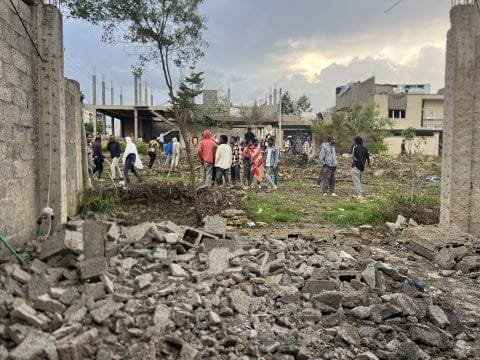
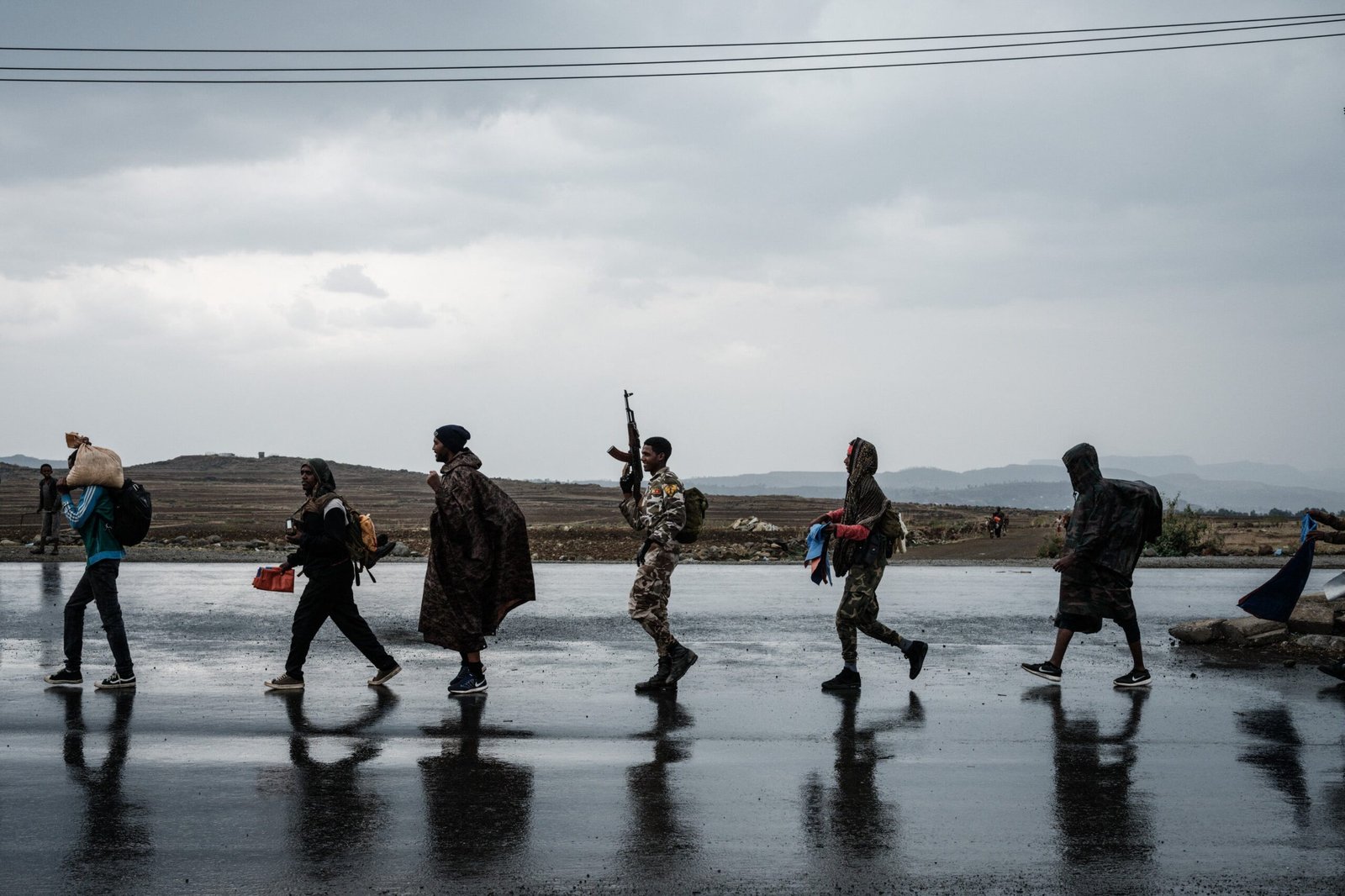
On August 1, 2026, Ethiopian Defense Forces and Army 13 clashed in Shererina, a battle reportedly bolstered by Sudan’s Rapid Support Forces and the TEKEZA Militia—a unit originally formed by federal authorities in western Tigray to counter TDF and Fano.
Yet this was never simply a military confrontation; it was a deliberate test of competing narratives.
The Ethiopian government framed the battle as decisive proof that the TDF was irreparably weakened. Across social media, channels amplified claims that the EDF had engaged Army 70—the TDF’s most feared fighting force. In truth, the EDF faced Army 13, a capable but far less notorious contingent. By deliberately misrepresenting their opponent, the government manufactured the illusion of a major triumph.
Reality, however, proved unforgiving. Army 13, stationed in the strategic western reaches of Tigray near the Sudanese border, mounted a far more formidable defense than anticipated. When the dust settled, Shererina had shattered the federal narrative entirely. Far from being broken, the TDF had demonstrated a chilling capacity to repel a coordinated, well-supported assault. For the Ethiopian army, the defeat landed as a profound psychological blow—one that corroded years of carefully built morale and credibility.
The government’s overconfidence proved its undoing. Media teams, deployed to document victory, instead captured the spectacle of a rout. The subsequent media blackout did little to contain the damage; it only deepened public distrust. For an administration that had loudly proclaimed its military supremacy, silence became the most damning response of all
The Political Fallout
The consequences of Shererina extend far beyond the immediate battlefield. The defeat has emboldened the TSEMDO coalition—an alliance of the TPLF, FANO, OLA, and other Ethiopian forces—formed in response to what analysts describe as the Ethiopian governments short-sighted and miscalculated political strategy.
The victory has also galvanized the TDF, FANO, OLA, and other coalitions resisting the Ethiopian government’s brutality. For the Tegaru population, the engagement has proven that their forces remain capable of shielding them from another catastrophic campaign by the federal government. This carries significant political implications: it undercuts the efforts of former TPLF leaders who had urged civilians to flee and reinforces the notion that armed resistance remains a viable path forward.
The Strategic Reconfiguration
The THEMDO Coalition: A New Force in Ethiopian Politics
The emergence of the TSEMDO coalition—comprising the TPLF, FANO, OLA, and allied internal factions allegedly supported by state of Eritrea and Sudan—constitutes a geopolitical development that Ethiopia’s federal government has critically underestimated.
What initially presented as a fragmented opposition movement has consolidated into a unified political-military front capable of challenging the state’s monopoly on legitimate force. Importantly, this coalition’s formation cannot be disentangled from Ethiopia’s own foreign policy conduct. Addis Ababa’s pursuit of port access through Eritrean territory was interpreted in Asmara as an infringement on national sovereignty, while its overtures to the RSF in Sudan alienated the Khartoum government.
These strategic miscalculations have collectively incentivized regional actors to align with Ethiopia’s domestic adversaries, thereby fostering a hostile perimeter around the federal state.
Concurrently, the operational capacity of opposition forces has undergone marked professionalization. The TDF, OLA, and FANO are reportedly functioning with enhanced coordination, supported by external intelligence, logistical networks, and material resources that approximate the capabilities of a national military apparatus.
This development fundamentally diminishes the viability of a unilateral military resolution to the ongoing crisis. Should the federal government opt for cross-border military action to interdict external support, such measures would provide neighboring states with legitimate grounds for broader military engagement—a trajectory that would exacerbate Ethiopia’s strategic vulnerability. Given the government’s established pattern of reactive decision-making, this outcome remains a tangible and near-term possibility.
The Demographic and Humanitarian Dimension
The humanitarian situation in Tigray remains catastrophic. Millions of Tigrayans displaced from Western Tigray still live in Internally Displaced Peoples, IDP, shelters in Tigray. The economic blockade continues, with supplies of goods, fuel, and basic necessities controlled by the federal government.
The federal government has also been accused of using IDPs as a political tool, holding them in camps within Tigray in the hope that they will grow weary of the TPLF and eventually rise up against the party.
The demographic dimensions of the conflict are equally troubling. The federal government’s propaganda campaign has encouraged Tigrayan flight to Addis Ababa and other parts of Ethiopia. Many Tegaru have relocated, driven by in fear of second round war in Tigray. For many analysts, this exodus, if sustained, could fundamentally alter the demographic balance of the region, making a political settlement more difficult.
The Road Ahead: Implications and Scenarios
Scenario One: Escalation and Fragmentation: Following its defeat at Shererina, the Ethiopian government will seek to restore credibility through a successful offensive, making a new front in Tigray highly probable. However, this approach entails considerable risk. Prolonged conflict demands substantial economic and strategic resources—straining an already fragile economy—while opposition forces, backed by external actors, may prove resilient. Moreover, the risk of state fragmentation is acute. The current strategy has placed Ethiopia’s political unity in peril, and a protracted campaign could push the country toward irreversible collapse.
Scenario Two: Stalemate and Proxy Conflict: A protracted stalemate is likely, with no decisive victor. The conflict is shifting toward proxy warfare, as regional actors’ back rival Ethiopian factions—RSF supports the government, Sudan backs opposition forces, and Eritrea leverages opposition groups to deter Ethiopian aggression and assert political influence. Such escalation would devastate Ethiopia, deepen ethnic divisions, prolong suffering, and destabilize the region while inviting external interference..
Scenario Three: Negotiation and Reconciliation: The third scenario, and the most desirable, is a return to negotiations. The military setback at Shererina has exposed the limitations of the Ethiopian government’s strategy and its reliance on propaganda narratives unsupported by battlefield realities.
This could create an opening for a more realistic approach to negotiations. However, the obstacles to negotiation are significant. The federal government has consistently refused to address the fundamental issues, including the status of Western Tigray, the reinstatement of the TPLF as a political party, and the lifting of the economic blockade. The opposition forces, emboldened by their recent victory, may also see little incentive to negotiate from a position of weakness.
Recommendations: A Path Forward
1. Ceasefire and De-escalation: The immediate priority must be an immediate and unconditional ceasefire to halt further bloodshed. The violence at Shererina has demonstrated the devastating consequences of continued military confrontation. Both sides must recognize that a military solution is unattainable and that the only path to peace is through negotiation.
2. Inclusive Dialogue: All warring parties must be brought to the negotiating table under credible mediation, preferably by the African Union or the United Nations. The dialogue must be genuinely inclusive, encompassing not only the federal government and the TPLF but also the OLA, Fano, and other regional actors. The Themdo coalition must be recognized as a legitimate negotiating partner.
3. Humanitarian Access: Unimpeded humanitarian access to all conflict-affected areas is essential. The humanitarian situation in Tigray is catastrophic, with millions of displaced persons facing severe shortages of food, medicine, and basic necessities. The international community must demand and enforce humanitarian access as a confidence-building measure.
4. End the Economic Blockade:The economic blockade on Tigray must be lifted. This blockade has caused immense suffering and has been used as a tool of coercion. Lifting the blockade would demonstrate good faith and create conditions conducive to negotiation.
5. Media Freedom: Independent reporting must be allowed to ensure transparency and accountability. The media blackout following the Shererina engagement has undermined public trust. A free and independent media is essential for informed public debate and accountability.
6. Regional Diplomacy: Engagement with neighboring countries is essential to prevent external escalation. Ethiopia’s foreign policy has alienated key regional actors, contributing to the coalition against the federal government. A more diplomatic approach could reduce regional tensions and create conditions for internal resolution.
7. National Reconciliation: A broader dialogue to address Ethiopia’s underlying political and ethnic tensions is essential. The ethnic federalism debate, the status of contested territories, and the distribution of political power are fundamental issues that must be addressed if Ethiopia is to achieve lasting peace.
8. International Support: Global partners must be mobilized for mediation, monitoring, and peacebuilding. The international community has a responsibility to support a peaceful resolution to Ethiopia’s crisis, learning from the failures of the international response to the 2020-2022 Tigray war.
Conclusion: The Cost of Miscalculation
The Shererina engagement highlights a significant operational miscalculation by the Ethiopian federal government. The decision to attack the 13th Army Division appears to have overestimated federal military advantages and underestimated the division’s tactical effectiveness, which proved comparable or superior to that of the Ethiopian Defense Forces in this instance. This outcome not only exposes vulnerabilities within federal military capacities but also risks strengthening opposition coalitions and compounding strategic pressures on the government.
With institutional cohesion already fragile after years of conflict, continued military action threatens further political fragmentation and carries substantial humanitarian costs for civilian populations. Military means have not yielded decisive results, making diplomatic engagement a necessary alternative. Regional and international actors, alongside domestic parties, should reassess existing mediation frameworks to address underlying drivers of the conflict.
The central question is whether lessons from Shererina will inform future strategy before further losses accumulate and regional stability erodes. Continued confrontation risks fragmentation and spillover effects, whereas a negotiated settlement offers a more sustainable path forward.
Source: MARTINPLAUT.COM