By BINIAM DANIEL
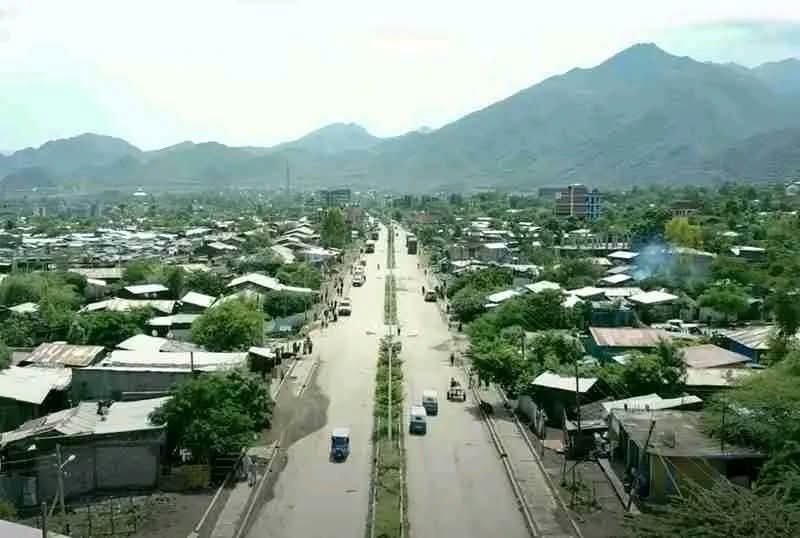
Amnesty International has called for an investigation into possible war crimes following artillery attacks by Ethiopian federal forces and their allied Tigray Peace Forces (TPF) that killed civilians and wounded several others in Alamata, southern Tigray, in late September.
The organization also accused TPLF forces of endangering civilians by establishing military positions in populated areas, including schools.
In a report published Tuesday, Amnesty said it had independently confirmed the deaths of 14 civilians in four artillery attacks carried out between September 26 and 28, when federal forces and their TPF allies retook the strategic town from the TPLF. The strikes hit residential neighborhoods and commercial locations, including areas where residents reported no military presence.
According to Amnesty’s Senior Director for Regional Human Rights Impact, Yasmine Ahmed, federal and allied forces subjected Alamata to repeated artillery bombardment over three consecutive days, despite the presence of approximately 80,000 residents.
Ahmed said the deployment of artillery, which has wide-area effects, in densely populated neighborhoods poses severe risks to civilians. She stressed that indiscriminate attacks violate international humanitarian law and warrant investigation as possible war crimes.
Amnesty said its findings were based on interviews with 28 survivors, eyewitnesses, victims’ relatives, medical and humanitarian workers, as well as an examination of eight videos, 17 photographs, satellite imagery and other publicly available information. The organization said it had withheld or altered identifying information to protect those who provided testimony.
One of the deadliest incidents occurred at dawn on September 27, when artillery shells struck five homes in the condominium neighborhood of Kebele 04, killing seven people and injuring four others, according to eyewitness accounts.
Among the victims were 26-year-old Meron Sewasew, her eight-year-old son, Markon Girmahiwot, and her 33-year-old brother, Tewekel Sewasew. Meron’s two-year-old son survived with minor injuries, according to her husband, who was away from the town when the attack occurred.
The same bombardment killed four members of a neighboring household, including 40-year-old Kumhis Kahsay and her 14-year-old child, Helina Hailay, alongside 38-year-old Lezeu Yirga and her three-year-old child.
A surviving relative told Amnesty that the victims were carrying out their usual household activities when fragments from the artillery strike hit the compound. Kumhis had reportedly returned from church and was preparing injera when the shelling occurred.
Another deadly incident took place around 11 a.m. on September 26, when artillery struck the Nigus Shimoy bar near a market in a largely commercial area bordering residential neighborhoods.
At least three people were killed, according to a survivor and an eyewitness. The attack occurred while residents were gathering to celebrate Demera, marking the eve of the Ethiopian Orthodox Meskel festival.
On September 27, another shell struck a family residence in Kebele 02, killing 55-year-old Deyima Rebso and seriously injuring her 62-year-old husband, Ararse Yasin, their children and a 10-year-old grandchild. Amnesty’s weapons investigator said fragments recovered from the site were consistent with artillery ammunition of a type used by Ethiopian federal forces and their allies.
A healthcare worker at Alamata Hospital told the organization that almost all casualties treated during the three days were civilians, with shrapnel believed to have caused most of the injuries.
Amnesty identified the Waja Ena Tumuga area, approximately 13 kilometres south of Alamata, as the primary location from which federal and allied forces conducted artillery attacks against the town. Witnesses reported seeing Ethiopian National Defence Force (ENDF) artillery being transported to Waja, particularly around the Ayer Marefiya area.
However, the report also raised concerns over the conduct of TPLF forces, documenting their presence in civilian-populated locations, including schools, hotels and multi-storey buildings, before and during the renewed fighting.
Six people interviewed by Amnesty said that nearly all schools in Alamata had been used by TPLF fighters as military positions in the months preceding the clashes. Some of these facilities were reportedly used to launch artillery attacks.
The organization said establishing military positions in densely populated civilian areas exposed residents to danger. Nevertheless, it emphasized that such actions do not remove the obligation of opposing forces to distinguish between civilians and military targets.
Ahmed stressed that any violations committed by TPLF forces could not justify indiscriminate artillery attacks against populated neighborhoods by federal and allied forces.
The report also examined the possibility of military activity at the Werknesh Hotel and Biruh Tesfa School, but Amnesty said it could not independently establish whether TPLF fighters were present at either location when nearby strikes occurred.
It further documented reports of a drone attack on Alamata Preparatory School on September 22. Residents said TPLF fighters had positioned artillery at the school. Satellite images revealed a new burn mark near the facility on the same day, although the organization said the available evidence was insufficient to determine the precise circumstances of the incident.
Amnesty said it formally contacted the ENDF, TPF and TPLF on October 27 to request information and subsequently shared its findings with the federal military and TPF on November 17. Neither the ENDF nor the TPF had responded by the time the report was published.
In a response dated November 18, the TPLF rejected the allegations against its forces, describing them as unfounded and calling for an independent, impartial and comprehensive investigation before responsibility could be determined.
Alamata became a major flashpoint during renewed fighting in southern Tigray in late September. Federal forces and allied TPF fighters regained control of the town on September 28 following clashes and the withdrawal of the TPLF-led local administration.
The East African Daily previously reported that more than 50 civilians had been killed in and around Alamata during the fighting.
The clashes also forced residents to flee to neighboring areas, while hospitals faced increasing pressure and humanitarian access became more difficult. Médecins Sans Frontières (MSF) had earlier reported a substantial increase in wounded patients arriving at hospitals it supports across the region.
Amnesty warned that the persistent failure to investigate and prosecute violations committed during Ethiopia’s previous and ongoing armed conflicts has reinforced a culture of impunity, leaving civilians increasingly vulnerable to further abuses. The organization called on the UN Human Rights Council to establish an independent investigative mechanism mandated to document violations, identify individuals responsible for crimes under international law and pursue accountability.
It also urged Ethiopian authorities to provide unrestricted access to conflict-affected areas for independent human rights monitors, journalists and humanitarian organizations.
Amnesty warned that restrictions on independent scrutiny, combined with the continuation of multiple armed conflicts and rising regional tensions, could expose civilians to further violations unless perpetrators are held accountable.