By BINYAM DANIEL
Questions mount over the Ethiopian government’s drone warfare strategy as witnesses describe a deadly strike on civilians fleeing insecurity in western Oromia.
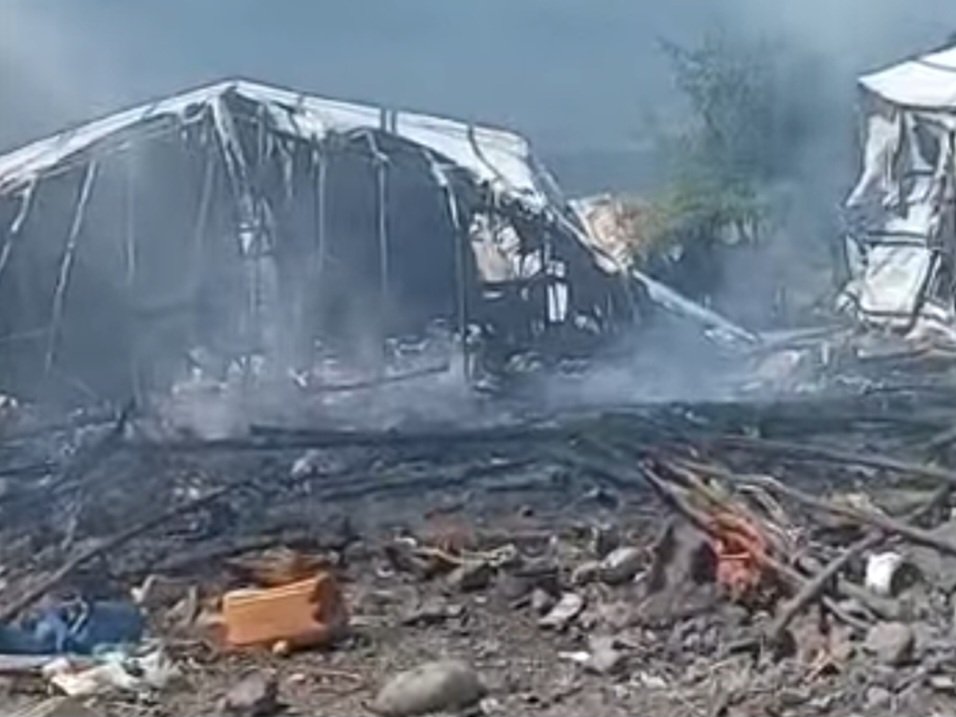
A reported drone strike in western Oromia that allegedly killed 36 displaced civilians, including eight children, has intensified public outrage and renewed questions about the Ethiopian federal government’s expanding reliance on aerial warfare in its internal conflicts.
The attack, reported by BBC Amharic on November 12, reportedly occurred on Friday night, November 6, in Kiremu (Kiramu) district of western Oromia. According to five witnesses who spoke to the BBC, the victims were among an estimated 200 to 300 civilians fleeing insecurity in neighbouring Gida Ayana district and attempting to reach the Amhara region.
The witnesses said the displaced people had been escaping deteriorating security conditions in their villages since August 2025. Their journey took them through rural areas at night, where they relied on handheld torches to navigate the difficult terrain.
According to their accounts, a drone was seen circling above the group before the strike. The witnesses alleged that the aircraft subsequently fired on the civilians, killing dozens of people.
The reported death toll of 36 includes eight children, according to the witnesses. Other victims reportedly included women, elderly people and pregnant women.
The BBC said it could not independently verify the reported death toll. It also reported that attempts to obtain comments from the Ethiopian National Defence Force and the Oromia regional government’s communications authorities were unsuccessful.
Nevertheless, the accounts raise deeply troubling questions about the circumstances surrounding the attack, particularly the reported presence of hundreds of displaced civilians moving together at night.
A growing pattern of civilian casualties
The Kiremu incident comes amid mounting reports of civilian casualties associated with aerial attacks across Ethiopia’s conflict-affected regions.
In Oromia, Amhara and Tigray, the increasing use of armed drones has transformed the nature of military operations, raising serious concerns about the protection of civilians caught between government forces and armed opposition groups.
In Amhara, a drone strike on the Jari Number 2 displacement shelter in South Wollo on October 29 reportedly killed at least 15 people, including five children, according to sources cited by Reuters. The shelter housed more than 1,700 people displaced by previous violence. Dozens more were injured.
In Tigray, reports of deadly aerial attacks have also emerged. A reported October 30 strike on a civilian truck in Rama killed 12 people, according to the Council on Foreign Relations’ conflict reporting. Other reported attacks have raised concerns about the safety of displaced families, humanitarian operations and civilian infrastructure.
These incidents point to a critical question: how effectively are military operations distinguishing legitimate military targets from civilians in areas where armed groups and civilian populations live and move in close proximity?
Domestic drone production and questions about accountability
The Ethiopian federal government under Prime Minister Abiy Ahmed has increasingly incorporated unmanned aerial vehicles into its military operations against armed insurgencies.
While authorities have maintained that military operations are directed against armed groups and that civilian casualties are not intended, repeated reports of deaths among displaced populations and other non-combatants are raising questions about targeting procedures, intelligence assessments and operational safeguards.
Ethiopia’s growing interest in domestic drone production adds another dimension to the debate.
As the country expands its domestic defence manufacturing ambitions and continues to rely on imported military technology, questions are emerging about the capabilities, surveillance systems, precision and accountability mechanisms associated with the weapons being deployed.
Are military commanders adequately verifying targets before authorising strikes? What procedures are followed when intelligence indicates that civilians may be present? And who is held responsible when an attack results in mass civilian casualties?
These are not merely technical questions. They concern the protection of human life and the government’s obligations under international humanitarian law.
The East African Daily speaks with Oromo residents
The East African Daily has spoken with several Oromo residents about the reported attack and the broader implications of the growing use of drones in the region.
Their accounts and concerns add to the growing public debate over the safety of civilians living in conflict-affected communities.
For populations already experiencing displacement, insecurity and the destruction of livelihoods, the prospect of aerial attacks adds another layer of fear and uncertainty.
The reported Kiremu victims were not described by witnesses as a military formation. They were people attempting to escape insecurity and find safety elsewhere.
If the accounts are substantiated, the incident raises serious questions about whether sufficient precautions were taken to protect a large group of visibly vulnerable civilians.
The Ethiopian government must provide a credible explanation of what happened, whether a federal military drone was involved, what intelligence informed the operation and whether an investigation has been initiated.
Silence or general statements about targeting armed groups cannot adequately address specific allegations of mass civilian deaths.
Where is the international community?
The reported killings in Oromia also raise questions about the response of international institutions and governments that have repeatedly called for civilian protection in Ethiopia.
The United Nations, African Union, European Union and international human rights organisations face renewed calls to demand independent investigations into reported civilian deaths resulting from aerial attacks.
International humanitarian law prohibits deliberate attacks against civilians and indiscriminate attacks.
Parties to armed conflicts are also required to take all feasible precautions to minimise civilian harm.
Where credible allegations of unlawful attacks emerge, independent investigations are essential to establish the facts and identify those responsible.
The growing number of reports involving civilians, displacement sites and other non-military locations makes independent scrutiny particularly important.
Accountability cannot remain an unanswered question
The reported Kiremu massacre presents the Ethiopian government with serious questions that cannot be dismissed as routine allegations arising from an armed conflict.
If the federal government maintains that its drone operations are precise and intelligence-led, it must demonstrate that those claims are supported by credible investigations, transparent findings and meaningful accountability.
The central issue is no longer simply whether Ethiopia has the military technology to conduct increasingly sophisticated aerial operations. It is whether the authorities deploying these weapons have effective safeguards to prevent civilian deaths and whether those responsible for unlawful attacks will face consequences.
A source who spoke with The East African Daily raised a fundamental question about the international community’s response to the growing reports of civilian casualties.
How many more civilians must die before the international community demands accountability?
For the families of those reportedly killed in Kiremu, explanations and official assurances will not bring their loved ones back. But an independent investigation, public disclosure of the findings and accountability for any violations could help prevent similar tragedies.
Ethiopia’s expanding drone warfare must not become a reality in which civilian deaths are treated as an unavoidable consequence of military operations.
The protection of civilians is not optional. It is a legal obligation.
Several activists are calling for an independent investigation into the reported Kiremu drone strike, the publication of its findings, and accountability for anyone found responsible for violations of international humanitarian law.