By BINYAM DANIEL
From deadly attacks on Orthodox Christians in Oromia to ransom kidnappings on major highways and alleged extortion by security forces in Addis Ababa, Ethiopia’s deepening insecurity exposes a government increasingly unable to guarantee the most basic responsibility of the state: protecting human life.
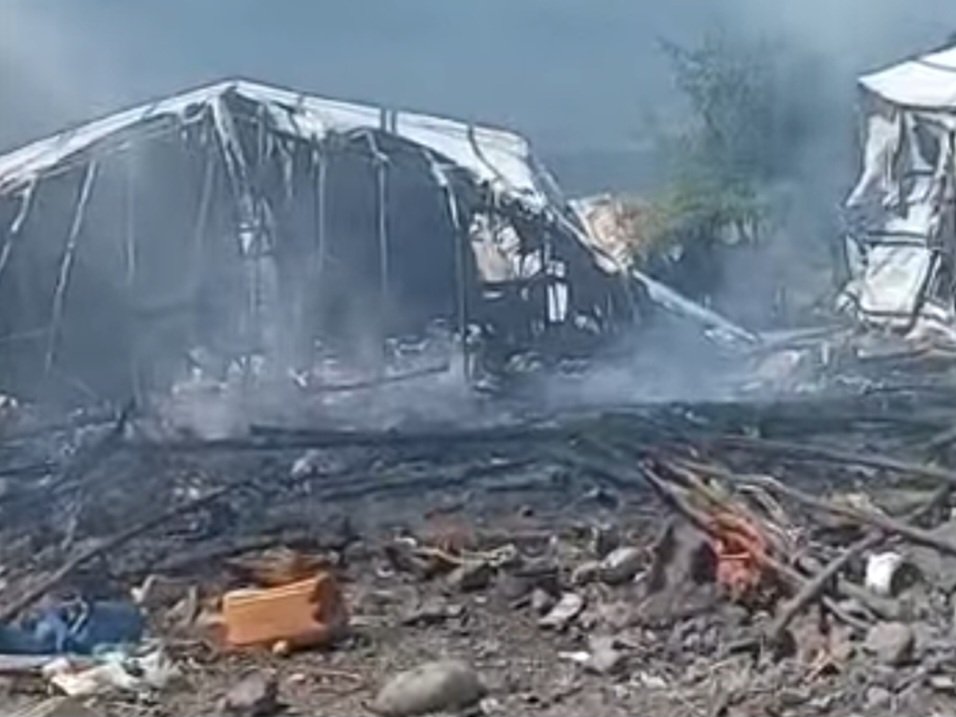
Ethiopia’s worsening security crisis has once again claimed the lives of innocent civilians, with at least 34 Ethiopian Orthodox Christians reportedly killed in a fresh attack by armed gunmen in the Oromia region on Thursday.
The latest killings bring the reported death toll from attacks on worshippers in the region to at least 94 in less than three weeks, following two separate incidents on October 20 and 24 in the Merti and Shirka districts, where at least 60 people were reportedly killed.
The latest massacre occurred in Endato village, in Robe district, where armed assailants reportedly targeted residents, killing dozens, injuring several others and destroying property.
The killings have intensified public outrage and raised serious questions about the Ethiopian government’s ability, or willingness, to protect vulnerable communities amid escalating armed violence.
In a statement issued on October 26, the Ethiopian Orthodox Tewahedo Church’s Holy Synod condemned the attacks and called on the authorities to take urgent measures to protect worshippers and prevent further bloodshed.
The latest assault came even after authorities announced the identification of 70 suspects allegedly connected to the October killings and related violence. Yet another deadly attack has demonstrated how little these announcements have done to reassure communities living under the constant threat of armed violence.
Local survivors and church deacons have questioned the response of federal and regional security forces, alleging that security personnel either failed to intervene or were unable to stop the attacks, which reportedly continued for several hours. Their accounts have fuelled anger and renewed demands for accountability.
On Wednesday, the Ethiopian Human Rights Commission attributed the earlier attacks to the Oromo Liberation Army (OLA), an armed group operating in the region. However, the group has repeatedly rejected accusations that it deliberately targets ordinary civilians, describing such allegations as baseless.
The question of responsibility remains contested and requires independent investigation.
Sources who spoke to The East African Daily questioned the likelihood of the OLA deliberately targeting Orthodox Christian communities, particularly given the broader political and military dynamics involving armed opposition groups. The OLA and FANO have both been associated with the broader Alliance for Survival framework opposing the federal government, although their political objectives and military positions are not identical.
FANO, which presents itself as fighting against atrocities committed by the federal government against Amhara communities, has also made the protection of Amhara civilians a central part of its political narrative.
This complicated political landscape makes independent investigations into attacks on civilians even more essential. Whatever the identity of the perpetrators, the killing of worshippers and the destruction of civilian communities cannot be justified.
A government losing control of the country’s security
Since Abiy Ahmed came to power in 2018, Ethiopia has experienced successive waves of armed conflict, political violence and widespread displacement.
The devastating Tigray war, continuing insurgencies in Oromia and Amhara, and growing insecurity in other parts of the country have exposed the fragility of the country’s security institutions.
Perhaps one of the most alarming manifestations of this deterioration is the increasing danger associated with simply travelling from one part of Ethiopia to another.
Road travel, once an ordinary part of daily life, has increasingly become a potentially life-threatening undertaking. Passengers travelling by public buses, private vehicles and commercial transport are exposed to armed interceptions, abductions and ransom demands.
The state appears increasingly incapable of guaranteeing the safety of its own highways.
Ethiopia’s ransom kidnapping epidemic: When travelling becomes a gamble with human life
Abduction for ransom has developed into a major human security crisis, particularly in Oromia and Amhara, where prolonged armed conflicts, weakened law enforcement and economic instability have created opportunities for armed groups and criminal networks.
The victims are no longer limited to wealthy individuals or prominent public figures. Ordinary civilians, students, farmers, agricultural researchers, public transport passengers, cross-regional travellers and infrastructure workers have increasingly faced the threat of abduction.
Foreign workers, particularly those employed at manufacturing and cement facilities, have also reportedly been targeted for substantial ransom payments.
Highway kidnappings
Armed groups frequently intercept passenger vehicles and buses travelling along major highways connecting regional states with Addis Ababa.
One particularly alarming incident involved the reported mass abduction of more than 100 Debark University students from buses near Garba Guracha in Oromia, highlighting the vulnerability of students and ordinary travellers.
Ransom payments and economic devastation
Ransom demands reportedly range from 100,000 Ethiopian birr to more than 700,000 birr per captive, with some reports documenting demands reaching millions of birr for corporate employees and infrastructure workers.
Families are often forced to sell property, exhaust their savings or borrow money to secure the release of relatives.
The consequences extend far beyond the immediate victims. Entire families are plunged into financial hardship, while communities increasingly live with the fear that travelling outside their immediate surroundings could result in abduction.
Who is responsible?
Survivors and analysts have frequently pointed to the Oromo Liberation Army, also known by the government designation OLF-Shene, as one of the actors involved in abductions. However, the group has repeatedly denied institutional responsibility for targeting civilians for ransom.
Other reports point to armed criminal networks and opportunistic gangs exploiting security vacuums created by the country’s prolonged conflicts.
The government has a responsibility to investigate these crimes, identify the perpetrators and provide transparent information about its efforts to dismantle kidnapping networks. Simply blaming armed opposition groups without demonstrating effective protection for civilians is not an adequate response to a growing national security crisis.
Addis Ababa: Even the capital is no longer a safe place
Perhaps the most disturbing dimension of Ethiopia’s security deterioration is that insecurity is no longer confined to conflict-affected rural areas.
Addis Ababa, the country’s political and diplomatic capital, is increasingly facing allegations of arbitrary arrests, extortion, intimidation and heavy-handed security operations.
Sources who spoke to The East African Daily described widespread fear following recent security sweeps in different neighbourhoods of the capital.
According to these sources, hundreds of young people have reportedly been detained in recent weeks during operations conducted in residential neighbourhoods, on streets and in recreational establishments, including pool and billiard halls.
Some sources allege that even young people who possess Addis Ababa digital residence identification documents have been detained. They further claim that some detainees are required to pay between 2,000 and 5,000 birr to secure their release.
These allegations raise serious questions about due process, police accountability and the treatment of young people by law enforcement authorities.
While security officials have sometimes justified similar operations as efforts to combat urban crime, illegal gambling and establishments associated with shisha consumption, reports of families struggling to locate detained relatives or obtain clear information about their whereabouts are deeply concerning.
There are also growing fears that some of the roundups may be connected to informal or forced military recruitment.
Reports from communities and local media, including Ethiopia Observer, have highlighted concerns that young men, including minors, are sometimes taken from streets and checkpoints, particularly at night, and held at police stations or temporary detention facilities for days.
Similar concerns have emerged in parts of Oromia, Amhara, Mizan Aman and Wolaita, where security operations have intersected with counter-insurgency campaigns and efforts to identify suspected supporters of armed groups.
The distinction between legitimate law enforcement and arbitrary detention is fundamental. A government cannot claim to be restoring law and order while citizens are allegedly being detained without transparent legal procedures.
For some residents of Addis Ababa, the greatest fear is no longer simply criminal gangs but the very institutions established to protect them.
One source who spoke to The East African Daily said he no longer feels safe living in the capital, particularly when walking outside at night.
According to the source, the threat comes not only from thieves attempting to steal money and personal belongings but also from police officers who allegedly threaten him with arrest without a clear justification and demand money.
He said the possibility of being arrested simply for refusing to hand over money to law enforcement personnel is a fear that weighs even more heavily on him than the threat of ordinary street crime.
These allegations, if substantiated, point to a disturbing breakdown of public confidence in the institutions responsible for maintaining security.
The contradiction of Abiy Ahmed’s modernisation agenda
One of the most striking contradictions in Ethiopia today is the widening gap between the government’s ambitious modernisation and tourism development agenda and the deteriorating security conditions experienced by ordinary citizens.
Prime Minister Abiy Ahmed’s administration has invested considerable political and financial resources in transforming Addis Ababa, promoting tourism, modernising infrastructure and presenting Ethiopia as an emerging destination for international visitors and investors.
The capital has witnessed major urban redevelopment initiatives, new roads, beautification projects and ambitious public infrastructure programmes.
However, what is the value of a modernised capital if its residents cannot confidently walk its streets at night?
What is the purpose of promoting Ethiopia as a safe tourism destination when passengers travelling between regions face the threat of armed kidnapping, families cannot guarantee the safety of their children and worshippers are massacred in their places of residence?
A country’s security cannot be measured by the appearance of its capital, the number of newly constructed roads or the scale of its tourism promotion campaigns.
True national development begins with the protection of human life, the rule of law and the ability of citizens to live without fear.
The government cannot convincingly promote Ethiopia as a secure destination for international tourists while ordinary Ethiopians are increasingly concerned about travelling between cities, attending religious services or simply walking through their neighbourhoods.
A national security crisis demanding accountability
The unfolding situation raises a fundamental question: How has a country with a substantial security and military infrastructure reached a point where armed groups can repeatedly attack civilian communities, abduct passengers on major highways and operate in areas where government security forces are expected to maintain control?
The problem is not merely the existence of armed opposition groups or criminal networks. Such threats require effective law enforcement, intelligence gathering, accountable security institutions and a functioning justice system.
The deeper concern is the apparent inability of the government to translate its security apparatus into meaningful protection for ordinary citizens.
The killing of Orthodox Christians in Oromia, the growing reports of ransom kidnappings, allegations of police extortion and arbitrary detention in Addis Ababa are not isolated issues. Together, they paint a troubling picture of a country where the most basic guarantees of human security are increasingly under threat.
Ethiopia’s authorities must move beyond public announcements, mass arrests and political accusations. They must demonstrate that they can protect civilians regardless of their ethnicity, religion, political affiliation or geographical location.
The government must also ensure independent investigations into the killings, prosecute those responsible, dismantle kidnapping networks and establish effective safeguards against unlawful detention and extortion by security personnel.
A government that can build a modern capital but cannot guarantee the safety of its citizens has fundamentally misunderstood the meaning of national development.
For millions of Ethiopians, the most pressing question is no longer how modern the country can become, but whether they can live in it without fearing that the next journey, the next night on the streets or the next visit to a place of worship could be their last.