By GEBREWAHID AMHA ABESHA
More than three years after the signing of the Pretoria peace agreement, rising tensions and visible military movements are reviving fears that Ethiopia could once again slide into war in the northern Tigray region.
What was meant to mark the beginning of a fragile recovery now appears increasingly strained, with political distrust, disputed implementation, and hardened narratives threatening to undermine the ceasefire framework.
The war from 2020 to 2022 resulted in devastating humanitarian effects. According to estimates from the African Union, over 600,000 people lost their lives due to violence, starvation, and inadequate medical services, with millions more being forced from their homes.
The conflict was widely described by international observers as one of the deadliest wars of the decade.
The November 2022 Pretoria Agreement, brokered under African Union mediation, formally ended large-scale hostilities.
It called for a permanent ceasefire, disarmament, restoration of essential services, humanitarian access, and reintegration of Tigray under the federal constitutional order.
While the agreement succeeded in halting one of the bloodiest war, its implementation has remained uneven and politically contested.
Today, warning signs suggest that the peace may be eroding and that routine international expressions of “concern” may not be sufficient to prevent renewed catastrophe.
Fragile Implementation and Competing Narratives
One major source of renewed tension lies in sharply differing interpretations of the Pretoria Agreement and its implementation.
Federal authorities have faced criticism from Tigrayan voices and some independent analysts who argue that key provisions particularly those concerning territorial administration, full restoration of services, and the safe return of displaced populations have been delayed or selectively applied.
According to this view, implementation has been shaped by federal political and security priorities rather than by a strictly sequenced peace roadmap.
At the same time, Tigrayan political and military actors have been criticized by federal officials and other Ethiopian stakeholders for moving too slowly on security realignment and disarmament commitments, and for attempting to preserve pre-war political dominance within the region.
Allegations of renewed external contacts and regional maneuvering have further heightened suspicion.
Tigrayan representatives counter that delays and hesitations stem from unresolved security threats, incomplete territorial normalization, and deep mistrust — not deliberate obstruction.
They argue that disarmament without credible security guarantees and administrative clarity would expose communities to renewed vulnerability.
These competing narratives underscore a central reality of post-conflict transitions: signing an agreement is far easier than building durable trust between former combatants.
Internal Fragmentation and Political Risk
Internal divisions within former Tigrayan leadership structures have added another layer of instability.
Reports point to a growing split between pragmatic factions favoring structured engagement with federal authorities and hardline elements resistant to concessions they view as politically or territorially damaging.
Fragmentation within post-conflict leadership movements often increases the risk of escalation.
When authority is fragmented, the ability to enforce commitments declines, public messaging becomes uneven and contradictory, and space opens for spoiler actors to undermine progress and destabilize the process.
Such fragmentation can also tempt opposing actors to pursue advantage rather than compromise, a dynamic that has historically destabilized fragile ceasefires.
There are also signs that some federal decision-makers may view a renewed confrontation as manageable or even winnable under changed battlefield and political conditions.
That perception itself is dangerous. Post-conflict environments are volatile, and second wars are often more fragmented, less controllable, and more destructive than the first.
Indicators of Possible Escalation,
Recent weeks have brought multiple indicators that have alarmed observers and local communities.
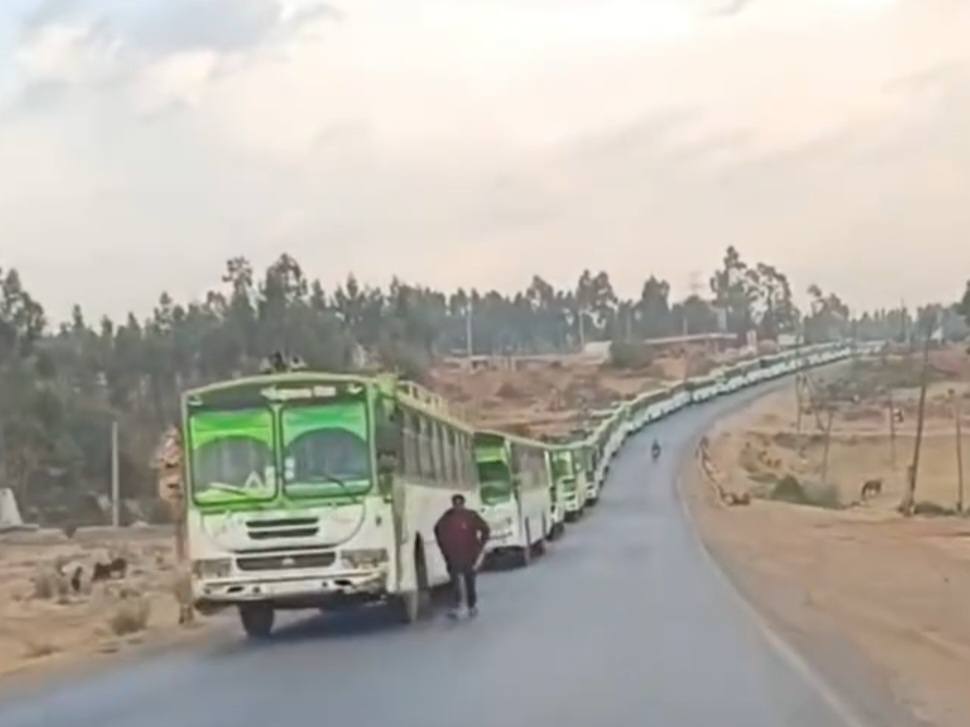
Residents and regional monitors have described increased troop movements and heavy equipment deployments around Tigray’s borders.
While governments often characterize such actions as precautionary, the scale and visibility of the buildup exceed routine rotations, raising fears of preparation for confrontation or coercive pressure.
Recent hostilities and drone strikes
The recent hostilities in western Tigray have been confirmed by both the Tigray government and reports detailing drone strikes in various regions of Tigray. These developments hold the potential to escalate into a full-scale war.
Freezing Bank Accounts, Cash flow Restrictions
The bank accounts of TPLF leaders and senior members of the Tigray Defense Forces have been frozen, mirroring measures implemented at the onset of the first war.
The federal government has considerably restricted the flow of fuel into Tigray, as well as significantly diminished the cash flow for banks located in the region
Sharpened Media Framing
Government-aligned media narratives have increasingly portrayed Tigrayan actors as linked to renewed insurgent activity and regional destabilization.
Such framing can shape domestic public opinion and create political space for tougher security measures but it can also narrow diplomatic off-ramps.
Community-Level Security Signaling
Reports of official meetings with Tigrayan residents in major cities have triggered anxiety, especially given past periods when similar engagements coincided with heightened suspicion and surveillance.
Even when framed as preventive outreach, identity-focused security messaging can deepen communal fear and mistrust if not handled transparently and inclusively.
Security experts warn that in tense post-war settings, visible mobilization combined with accusatory narratives significantly increases the risk of miscalculation, accidental clashes, and rapid escalation.
International Response: Concern Without Leverage
International actors have again urged restraint and dialogue. Multilateral institutions and major partners continue to emphasize full implementation of the Pretoria framework, civilian protection, and de-escalation.
However, the current diplomatic posture appears constrained. Federal authorities maintain that the core political and military questions were already settled by the 2022 agreement and have resisted calls for expanded or parallel negotiations.
That stance complicates preventive diplomacy at a moment when confidence-building measures may be most needed.
The pattern is familiar: strong statements, limited enforcement tools, and reluctance to escalate diplomatic pressure absent open warfare.
During the previous conflict, sustained international engagement eventually contributed to negotiations but only after immense human cost.
Preventive diplomacy is always hardest before violence resumes. Yet it is also when it matters most.
Humanitarian Stakes and Strategic Blind Spots
Civilians remain the most exposed stakeholders. Many communities in and around Tigray are still recovering from war damage, displacement, and economic collapse.
Reconstruction is incomplete, services remain uneven, and humanitarian needs persist. Any return to large-scale hostilities would likely trigger new displacement, food insecurity, and regional spillover.
There is also a broader strategic risk often overlooked: repeated conflict cycles harden political identities and normalize militarized problem-solving.
Each relapse into violence reduces the credibility of negotiated agreements and increases the influence of actors who argue that force not dialogue determines outcomes.
To Stronger Prevention
If renewed war is to be avoided, several preventive steps could matter: Among others, independent, transparent monitoring of agreement implementation, Sequenced security guarantees tied to disarmament benchmarks,territorial and administrative dispute mechanisms with third-party facilitation, sustained humanitarian access insulated from political disputes, inclusive political dialogue beyond former belligerents and clear international consequence frameworks tied to escalation triggers.
Peace agreements do not fail only because parties disagree. They fail when disagreement is unmanaged and mistrust is allowed to compound without guardrails.
Conclusion
Northern Ethiopia stands at a delicate crossroads. The Pretoria Agreement stopped a devastating war, but it did not resolve the underlying political fractures that produced it.
Rising military signals, hardened rhetoric, and fragmented leadership landscapes now threaten to reopen a conflict whose costs are still being counted.
Expressions of concern remain important but concern without credible preventive leverage rarely changes trajectories.
The test ahead is whether diplomatic actors can move from reaction to prevention before events on the ground outpace words once again.
Therefore, immediate and tangible measures — not words alone — are urgently required to prevent a return to war and secure durable peace in Tigray.
Gebrewahd Amha Abesha is a former assistant professor at Dilla University and is currently an information management technician (GIS) residing in Toronto.
The author is reachable at: gebrewahdabesha@gmail.com