By BINYAM DANIEL
The closure of Ethiopian and Sudanese consulates, the diplomatic rupture with Eritrea and the confrontation with Somalia expose the growing failures of Abiy Ahmed’s foreign policy, raising questions about Ethiopia’s regional leadership while hosting the African Union headquarters.
Ethiopia, once regarded as one of Africa’s most influential diplomatic powers, is increasingly finding itself at the centre of regional tensions, diplomatic confrontations and growing distrust among its neighbours.
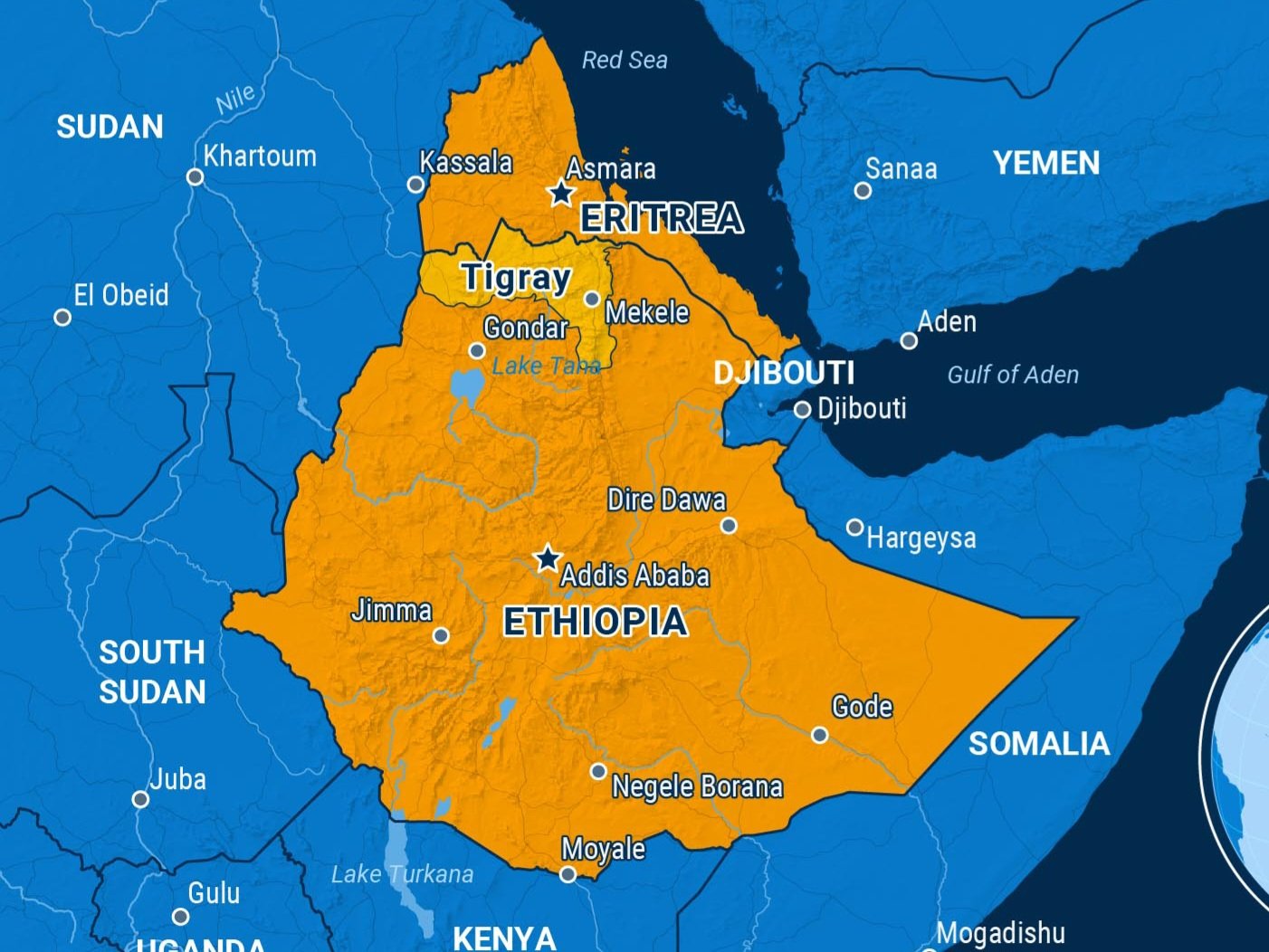
The latest deterioration in relations between Addis Ababa and Khartoum, culminating in the reciprocal closure of consulates near their shared border, represents another serious setback for Ethiopian diplomacy under Prime Minister Abiy Ahmed.
For a country that hosts the headquarters of the African Union (AU) and has historically presented itself as a leading voice in African affairs, Ethiopia’s deteriorating relationships with neighbouring states raise uncomfortable questions about the direction, competence and credibility of its foreign policy.
Abiy Ahmed, who received the Nobel Peace Prize in 2019 for his efforts to resolve the long-standing conflict between Ethiopia and Eritrea, came to power promising a new era of peace, regional cooperation and diplomatic engagement.
Seven years later, the image of a regional peacemaker has increasingly been overshadowed by unresolved conflicts, hostile diplomatic exchanges and deteriorating relations with countries across the Horn of Africa.
The closure of the Sudanese and Ethiopian consulates is not simply an administrative disagreement. It is a manifestation of a much deeper political crisis between two countries whose stability and security are closely interconnected.
According to officials cited by Reuters, Ethiopia ordered the closure of Sudan’s consulate in the border town of Assosa, giving six diplomats 48 hours to leave. Sudan subsequently shut down Ethiopia’s consulate in Gedaref and expelled its diplomatic personnel.
The diplomatic confrontation follows Sudanese accusations that Ethiopia has allowed the Rapid Support Forces (RSF), the paramilitary force fighting Sudan’s national army, to use Ethiopian territory to launch suicide drone attacks against civilian infrastructure. Khartoum has reportedly taken its allegations to the United Nations Security Council and the African Union’s Peace and Security Council.
Ethiopia denies supporting the RSF.
In return, Addis Ababa has accused Sudan, alongside Egypt and Eritrea, of supporting Tigrayan rebels fighting Ethiopian government forces. Those countries have rejected the allegations.
The increasingly hostile exchanges demonstrate how the conflicts in Sudan and Ethiopia are no longer isolated domestic crises. Instead, mutual suspicion and accusations of cross-border interference are creating conditions in which one country’s internal war could become another country’s regional security problem.
For Ethiopia, this is a particularly dangerous diplomatic position. Rather than serving as a bridge between competing regional interests, Addis Ababa is increasingly becoming a party to the region’s political and security rivalries.
Eritrea: The collapse of Abiy’s most celebrated diplomatic achievement
Perhaps the most damaging evidence of the failure of Abiy’s foreign policy is the collapse of relations with Eritrea, the very country with which he once secured a historic peace agreement.
In 2018, Abiy’s decision to end two decades of hostility with Eritrea was celebrated internationally and became the principal achievement behind his Nobel Peace Prize. The reopening of diplomatic relations raised hopes that Ethiopia and Eritrea would establish a new era of cooperation in the Horn of Africa.
That achievement has now been severely undermined.
The breakdown of relations between Addis Ababa and Asmara has been fuelled by competing accusations over military involvement in Ethiopia’s internal conflicts, the situation in Tigray and Abiy’s increasingly forceful demands for access to the Red Sea.
The irony is difficult to ignore. The prime minister who built his international reputation on making peace with Eritrea has presided over the breakdown of that relationship.
Instead of consolidating the 2018 peace agreement through sustained diplomatic engagement, confidence-building and regional economic cooperation, the two countries have returned to mutual accusations, military anxieties and diplomatic hostility.
Ethiopia’s pursuit of access to the sea is a legitimate economic and strategic concern for a landlocked country. However, such ambitions require negotiation, respect for international law and recognition of neighbouring countries’ sovereignty. They cannot be pursued through rhetoric that creates fears of territorial expansion or military confrontation.
A foreign policy that turns a strategic necessity into a source of regional insecurity is not a diplomatic success.
Somalia: A diplomatic crisis created by the pursuit of sea access
Ethiopia’s relations with Somalia have also suffered a major setback under Abiy’s administration.
In January 2024, Addis Ababa signed a controversial memorandum of understanding with Somaliland, the self-governing breakaway region that Somalia considers part of its sovereign territory. The agreement, which was linked to Ethiopia’s ambition to secure maritime access, triggered an angry response from Mogadishu.
Somalia viewed the agreement as a violation of its territorial integrity and sovereignty. The dispute escalated into one of the most serious diplomatic confrontations between the two neighbouring countries in recent years.
The crisis required Turkish mediation and eventually produced the December 2024 Ankara Declaration, in which Ethiopia and Somalia reaffirmed their commitment to respect each other’s sovereignty and agreed to pursue sea-access arrangements through negotiations under Somali sovereign authority.
Although diplomatic engagement subsequently resumed, the episode exposed the shortcomings of Addis Ababa’s approach to regional diplomacy.
How could a country that has long claimed a leadership role in African diplomacy pursue a strategic agreement with a breakaway territory without adequately addressing the sovereignty concerns of the internationally recognised government of Somalia?
Ethiopia has every right to seek reliable access to international maritime routes. But the manner in which that objective was initially pursued damaged relations with a neighbour with which it shares a long and sensitive border.
Diplomacy is not simply about securing national interests. It is also about understanding the interests, fears and legitimate concerns of neighbouring states.
The Somalia dispute demonstrated the consequences of neglecting that principle.
The African Union headquarters: A troubling contradiction
Perhaps the greatest political contradiction is that these diplomatic failures are unfolding in Addis Ababa, the capital of Ethiopia and the home of the African Union headquarters.
The African Union was established to promote continental unity, peaceful conflict resolution, cooperation, sovereignty and regional integration. Addis Ababa is regarded as one of Africa’s most important diplomatic centres precisely because of Ethiopia’s historical contribution to African liberation and continental institutions.
Yet the country hosting the continent’s principal political organisation is experiencing deteriorating diplomatic relations with several of its immediate neighbours.
The situation raises an uncomfortable question: what does it mean for African diplomacy when the host country of the African Union is itself increasingly embroiled in disputes that threaten regional peace?
Ethiopia’s position as host of the AU does not mean that it must enjoy permanently peaceful relations with every African country. However, it carries a special political and diplomatic responsibility to demonstrate commitment to dialogue, restraint and the principles of the organisation.
The closure of consulates with Sudan, the breakdown of relations with Eritrea and the earlier confrontation with Somalia represent a troubling record for a government that continues to present Ethiopia as a leading diplomatic power in Africa.
The contradiction is even more significant because the Sudanese government has taken its complaint against Ethiopia to the AU’s Peace and Security Council.
The institution headquartered in Addis Ababa is therefore being drawn directly into a dispute involving its host country.
A foreign policy increasingly defined by confrontation
The problem extends beyond individual diplomatic disputes. It reflects a broader failure to establish a coherent and predictable foreign policy capable of balancing Ethiopia’s national interests with the security concerns of its neighbours.
Under Abiy’s leadership, Ethiopia has repeatedly found itself confronting difficult regional relationships while simultaneously struggling with internal armed conflicts.
The country’s relations with Sudan are now deteriorating amid accusations of cross-border military interference. Its relations with Eritrea have collapsed into serious diplomatic hostility. Its relationship with Somalia was severely damaged by the Somaliland memorandum, requiring international mediation to restore dialogue.
These developments are particularly alarming because the Horn of Africa is already one of the world’s most politically fragile regions.
Sudan remains engulfed in a devastating civil war. Somalia continues to confront security challenges and the threat posed by armed extremist groups. Eritrea and Ethiopia have a history of deadly military confrontation. Meanwhile, Ethiopia itself faces renewed fighting and unresolved political tensions, particularly in Tigray and other parts of the country.
Instead of reducing these tensions through regional diplomacy, Ethiopia’s foreign policy has increasingly become entangled in the competing interests and security calculations of neighbouring governments.
The result is a dangerous environment in which accusations of interference, military support for armed groups and territorial ambitions are becoming increasingly common.
The consequences could extend far beyond diplomatic relations. A confrontation involving Ethiopia, Eritrea and Sudan could destabilise an already fragile Horn of Africa, disrupt trade routes, deepen displacement and create opportunities for further military escalation.
The international community should be particularly concerned about the possibility that Ethiopia’s internal conflicts could become interconnected with Sudan’s civil war and wider regional rivalries.
From Nobel Peace Prize to regional uncertainty
When Abiy Ahmed received the Nobel Peace Prize in 2019, he was celebrated as a leader who had ended a prolonged confrontation between two neighbouring countries and offered hope for a more peaceful Horn of Africa.
That recognition gave Ethiopia renewed international prestige and raised expectations that Addis Ababa would become a driving force for regional reconciliation.
But a Nobel Peace Prize is not a permanent diplomatic achievement. It is recognition of particular efforts at a particular moment in history. Its credibility must ultimately be measured against a leader’s subsequent commitment to peace.
Seven years after receiving the award, Abiy’s administration faces an increasingly difficult question: what remains of the regional peace project that once defined his international reputation?
The collapse of relations with Eritrea, the confrontation with Sudan and the diplomatic crisis with Somalia suggest that the government’s approach to foreign policy requires serious reassessment.
Ethiopia’s diplomatic challenges cannot all be attributed exclusively to Abiy Ahmed. Regional rivalries, competing national interests, the actions of neighbouring governments and the country’s internal political divisions have all contributed to the current situation.
Nevertheless, the responsibility for the strategic direction of Ethiopian foreign policy rests primarily with its political leadership.
A government cannot continually accuse its neighbours of interference while failing to establish credible mechanisms for resolving disputes. Nor can it expect regional trust while pursuing strategic objectives without sufficient consultation and confidence-building.
Ethiopia needs a foreign policy based on diplomacy rather than confrontation, cooperation rather than suspicion, and international law rather than unilateral political calculations.
A regional power losing its diplomatic influence
Ethiopia remains one of Africa’s most important countries. Its population, economic potential, military capabilities, geographical position and historical significance give it considerable influence in continental and international affairs.
But influence is not measured only by population, military strength or the location of international institutions within a country’s borders. It is also measured by the ability to build trust, resolve disagreements and maintain constructive relationships with neighbouring states.
That is precisely where Abiy Ahmed’s administration is facing an increasingly serious credibility problem.
The Horn of Africa does not need another regional confrontation. It needs responsible leadership capable of preventing domestic political crises from becoming international security emergencies.
For Ethiopia, the challenge is no longer simply how to secure access to the sea, manage relations with its neighbours or maintain its influence in the region. It is whether the country can recover the diplomatic credibility it has steadily lost.
The closure of the Sudanese and Ethiopian consulates should therefore be viewed as more than another diplomatic incident. It is a warning about the consequences of a foreign policy that has failed to turn Ethiopia’s strategic importance into sustainable regional partnerships.
A country that hosts the African Union should be a champion of African cooperation, not a growing source of diplomatic uncertainty in its own neighbourhood.
For a prime minister whose international reputation was built on making peace, the deterioration of Ethiopia’s relations with its neighbours represents one of the most troubling contradictions of his leadership.
And for the people of Ethiopia, who have endured years of war, displacement and economic hardship, another regional confrontation is the last thing the country can afford.
The question is no longer whether Ethiopia needs a foreign policy reset. It is how much more diplomatic and regional damage the country can sustain before its leadership recognises the need for one.