By Atwemereireho Alex
To understand the cultural phenomenon of Reagan Muhairwe, known across East Africa as Ray-G, one must first examine the historical geography of Uganda’s creative industry. For over three decades following the political and socio-economic stabilization of the late twentieth century, the nation’s popular music economy operated under an unwritten law of linguistic hegemony. Kampala, the capital city, functioned as both the gatekeeper and the solitary forge of artistic legitimacy.
To achieve national dominance, artists from the peripheral regions were tacitly required to abandon their native dialects in favour of Luganda or heavily Westernized Afro-pop templates. This socio-linguistic convergence created a monoculture that, while commercially lucrative, systematically disenfranchised the rich sonic traditions of the country’s regional hinterlands.
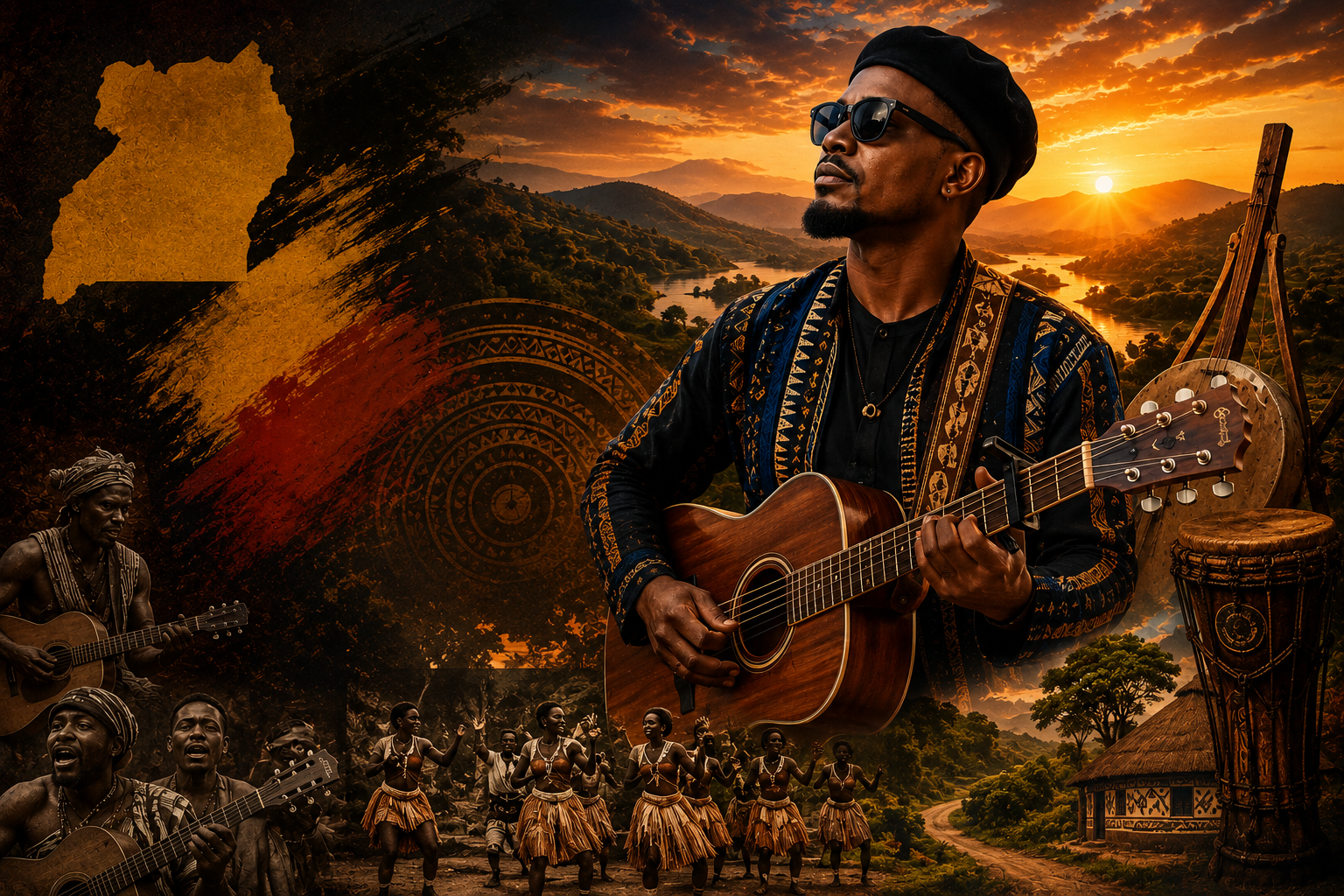
It is within this historical context of linguistic margin versus central metropolis that Ray-G’s trajectory must be situated not merely as a triumph of individual artistic talent, but as an audacious counter-hegemonic act of cultural preservation and aesthetic democratization. Emerging from Ishaka, Bushenyi in Southwestern Uganda, Muhairwe did not seek permission from the establishment to sing in Runyankole. Instead, he elevated his indigenous mother tongue into a medium of sophisticated, universal pop poetry.
When he made his first decisive waves with “Amarari” in 2014, his breakthrough single that announced his arrival by establishing Runyankole as a prime vessel for modern Afro-R&B pop storytelling followed by a relentless series of compositions that merged traditional Runyakitara vocal ornamentations with contemporary Afro-R&B production, he did something structurally unprecedented. He proved that regional authenticity was not a commercial limitation, but an untapped reservoir of global artistic distinction.
The mechanics of Ray-G’s music lie in his rare ability to bridge the sacred and the profane, the ancestral and the modern. His signature vocal delivery carries the cadence of the ekyevugo (traditional praise poetry), stripped of performative archaicness and infused with a sleek, contemporary soulfulness.
His expansive discography operates as a living archive where the linguistic nuances, spiritual worldviews, and emotional depth of the Ankole region are meticulously preserved. Consider foundational romantic masterpieces like “Rukundo”, where love is expressed through deep Banyankole metaphors of pastoral reverence, commitment, and vulnerability, or “Ninkwesiga”, a soul-stirring ballad anchored in themes of unconditional trust, faith, and emotional fidelity. In reflective tracks such as “Ow’eishe”, which celebrates ancestral identity and pride in one’s lineage, and “Checkmate”, a strategic pop anthem showcasing his lyrical dexterity, Ray-G constructs an intricate acoustic palette. His historic crossover collaboration “Omusheshe” (featuring Spice Diana) shattered regional barriers by blending central urban pop with western acoustic charm to dominate national airwaves. He further expanded this sonic range with “Make a Way (Mpigiza)”, an uplifting anthem detailing the struggle to carve out space against structural odds, and “Eizooba”, a poetic ode comparing love to the warmth and brilliance of the morning sun.
His exploration of human connection deepens across compositions like “Ringaaniza”, a melodic call for emotional harmony and equity in relationships, and “Weena”, an intimate love song highlighting total devotion to a chosen partner. He honors family bonds in “Omwerere”, a tender lullaby and tribute to the nurture of young life, while “Mugore” serves as a quintessential wedding anthem celebrating the beauty, grace, and cultural dignity of a bride. Modern romantic sensibilities shine through in “Falling”, an R&B-infused ballad capturing the exhilarating sensation of romance, and “You & Me”, a cross-cultural love ballad seamlessly fusing English and Runyankole into universal pop poetry.
Ray-G’s spirit of self-determination comes alive in “My Rules”, a defiant declaration of artistic independence setting his own terms in the industry, while “Enyena 100” delivers a playful, high-energy groove utilizing traditional livestock metaphors to express immense worth.
Tracks like “Kunu” bring captivating energy built on rhythmic guitar riffs and infectious regional hookcraft, complemented by “Manvuli”, an evocative piece exploring shelter and sanctuary for a loved one. His spiritual depth is anchored by “Humura”, a comforting song of solace offering reassurance during trial, “Yahweh (God)”, a devout expression of praise acknowledging divine grace behind his journey, and “Jubilate”, a joyous, danceable celebration of triumph. Together with “Noteera (Okuba)”, a deeply emotional composition addressing vulnerability and heart-bound dedication, and “Yoya”, a passionate song of deep desire driven by visceral guitar work, his discography stands as a monumental cultural archive.
Beyond aesthetics, the data of his career trajectory provides incontrovertible proof of a seismic shift in Uganda’s live music economy. For years, skeptics inside Kampala’s talent agencies argued that non-Luganda artists could never pull massive crowds outside their home districts. Ray-G methodically dismantled this myth.
In September 2019, his 10-year anniversary show in Mbarara City drew record-breaking crowds that filled venue spaces to capacity. Fast-forward to May 2024, when he breached the central fortress by holding a triumphant, heavily attended concert at the iconic Lugogo Cricket Oval in Kampala. By November 1st, 2025, when over 20,000 ticket-holding fans flooded Kakyeka Stadium in Mbarara amidst torrential downpours to witness his performance, it became clear that his listener base was no longer just a fan club; it had matured into a cultural movement of historic proportions.
This intellectual and artistic evolution is finding its definitive expression in the monumental showcase centering around Friday, August 7th, 2026, at the Kololo Independence Grounds in Kampala.
The choice of venue is deeply symbolic. Kololo is not merely an open space; it is the national ceremonial altar, historically reserved for state functions, political transformations, and legendary musical heavyweights such as Jose Chameleone, Bebe Cool, and Eddy Kenzo. For an artist who built his entire foundation on Runyankole lyrics to take over Kololo under major national promotion—such as the backing of Abtex Promotions—is marking the definitive, unequivocal collapse of Kampala’s linguistic monopoly.
The August 2026 Kololo concert is standing as an enduring institutional endorsement of regional art taking center stage on the national mantle.
Critics who attempt to frame Ray-G’s success strictly through the lens of tribal pride miss the deeper, universal mechanics of his songwriting. Art does not achieve cross-cultural resonance because audiences understand every literal word; it resonates when the emotional frequency is undeniable. When Ray-G strums his acoustic guitar and belts out melodies in songs like “Eizooba” or “Yoya”, the listener in Gulu, Nairobi, London, or Kampala experiences a visceral sense of truth that transcends linguistic translation. He communicates human longing, heartbreak, hope, and resilience with an authenticity that forces the listener to honour the culture from which those feelings spring.
Furthermore, Ray-G’s economic and cultural legacy extends far beyond his own discography. By establishing a viable, high-value music empire rooted in Western Uganda, he pioneered a sustainable blueprint for regional artists across the continent. Emerging talents such as T-Paul, Omega 256, and dozens of young producers and instrumentalists across the region now operate in an ecosystem whose gates were battered open by Muhairwe’s persistence. He proved that an artist does not need to abandon their rural roots or linguistic heritage to command seven-figure performance fees, corporate endorsements, and stadium-sized audiences. He decentralized creative capital, turning Mbarara into a secondary capital of Ugandan pop culture.
As the international music community turns its eyes toward Africa, frequently focusing on the dominant outputs of Nigerian Afrobeats or South African Amapiano, scholars and musicologists must pay closer attention to indigenous East African sub-genres. Ray-G represents the vanguard of an authentic African acoustic renaissance. His work asserts that modernity does not require westernization, nor does national appeal require cultural erasure.
As the lights illuminate the expanse of Kololo Grounds around the milestone of Friday, August 7th, 2026, the roar of the crowd is not merely celebrating a pop star performing his hit songs. It is signifying a historic coronation, a testament to a boy from Bushenyi who picked up an acoustic guitar, refused to alter his voice, and in doing so, permanently redrew the cultural, economic, and artistic map of East African music. Ray-G has achieved what only the rarest of cultural figures accomplish: he turned his mother tongue into a national treasure and his heritage into a global masterpiece.
The writer is a lawyer, researcher and governance analyst (LLM-Natural Resources Law-Kampala International University). He is reachable at: alexatweme@gmail.com