By TESFA-ALEM TEKLE
The Oromo Liberation Army (OLA) has described an emerging alignment among Ethiopia’s opposition forces as a “procedural consensus,” saying the arrangement does not amount to an agreement on the country’s fundamental political questions or give any participating group the authority to determine Ethiopia’s political future.
In a statement issued on September 17, the OLA said it was neither a participant in nor a component of the emerging alliance, but acknowledged that cooperation among opposition forces “stretching from west to east and from south to north” was taking shape.
The group said the emerging cooperation was focused on two main objectives: ending confrontations among opposition forces and redirecting their efforts toward what it described as “the source of destruction” affecting the country.
The second objective, the OLA said, was to create a broad-based transitional political opening through which Ethiopians could address their political demands through direct participation.
The OLA emphasized that the arrangement should not be understood as a political agreement on substantive issues.
Instead, it characterized the emerging framework as a “procedural consensus,” saying no participating organization had been given a mandate to negotiate, settle or predetermine what it called the fundamental political questions of the Ethiopian people.
“The immediate responsibility of opposition forces is therefore to create the political and security conditions in which such participation becomes possible,” the OLA said.
The group did not identify the opposition organizations involved in the emerging cooperation or provide details about its structure, leadership or decision-making mechanisms.
OLA raises allegations over armed groups in Wollega
The statement also addressed the security situation in Wollega, which the OLA described as one of Ethiopia’s most heavily militarized areas after years of conflict involving regular and irregular armed forces.
OLA alleged that a small armed faction claiming to operate in the name of the Amhara was initially trained, armed and deployed by the federal government to counter the OLA during the conflict involving the Tigray Defense Forces (TDF) and the OLA.
According to the group, some members of the faction later formally broke away from government militia structures following the outbreak of the war in the Amhara region.
The OLA further alleged that the federal government subsequently changed its approach and used the group to mobilize Oromo sentiment against the conflict in Amhara, including by attributing attacks against Oromo civilians to the faction.
The group also alleged that federal forces had at times appeared to confront the faction but later withdrew under circumstances that enabled it to obtain weapons and other resources. It claimed that intelligence was also shared in ways that helped the group secure money and weapons.
OLA called on Amhara forces to distance themselves from the armed faction and urged them to stop what it described as “irresponsible media briefings” concerning the group and to clarify their position. It warned that continued association with the faction could carry political consequences for Amhara forces beyond any potential short-term military gains.
OLA accuses government of civilian mobilization in Oromia
OLA further accused the federal government of directing the arming and mobilization of civilians in parts of Oromia where the group operates.
The group said such practices were not new and dated back to at least 2021, when it alleged that similar arrangements were pursued under the stated objective of protecting Amhara civilians.
The OLA argued that the issue should not be viewed solely through the question of whether the ruling Prosperity Party (PP) has acknowledged limitations in its ability to rely indefinitely on conventional military forces.
Instead, it said the proliferation of what it called regime-backed irregular armed groups across Oromia demonstrated the government’s continued reliance on such forces.
The OLA also urged stakeholders to distinguish between the federal government and Oromo civilians in their dealings, arguing that the government should not use the Oromo population as cover for its actions.
The claims regarding civilian mobilization and government support for armed groups could not be independently verified, and the OLA did not provide evidence to substantiate them.
Emerging opposition alliance remains loosely defined
The OLA’s statement comes as references to an emerging alliance among political and armed opposition forces have increasingly entered Ethiopia’s political and security discourse.
Different political and security actors have offered varying descriptions of the alliance’s composition, structure and objectives.
The term “Tsimdo” has also been used by some actors to refer to emerging alignments involving Tigrayan and other opposition forces, although the full composition and institutional structure of the reported alliance have not been publicly disclosed.
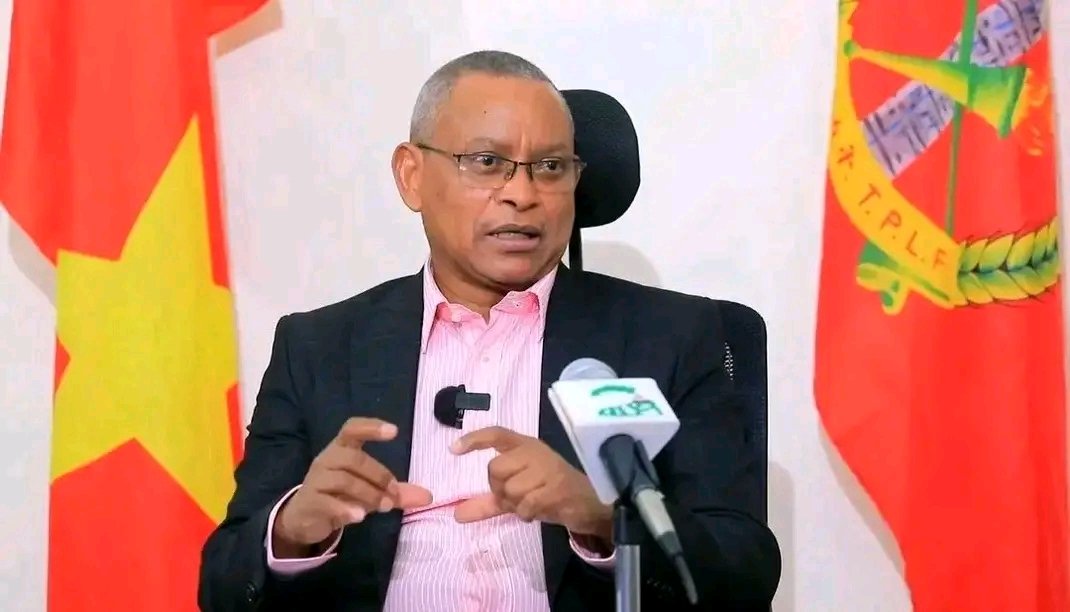
The East African Daily recently reported that Tigray regional president and Tigray People’s Liberation Front (TPLF) chairman Debretsion Gebremichael described the alliance as increasingly institutionalized.
In an interview with local media, Debretsion said the alliance had its own leadership, plans and a signed document, and that additional forces were expected to join.
“There are other alliance forces that should join,” Debretsion said, adding that the alliance “has its own plan and there is a document we have signed,” according to Weyin Media.
He said the alliance was not established solely to confront the Prosperity Party-led federal government but was intended to provide a broader framework for cooperation among its members.
“Our interests are not the same, we have our own respective interests, but at least we have one central thing that connects us,” Debretsion said.
He described the alliance as consisting of several phases, with its initial phase focused on what he characterized as a shared “existential threat” that its members had agreed to confront collectively.
At the same time, Debretsion said fundamental questions concerning Ethiopia’s future political arrangement should not be predetermined by the alliance or by any single political organization.
Whether Ethiopia remains united or undergoes changes to its political structure, he said, should not be decided by the TPLF or any other group alone.
According to Weyin Media, Debretsion said those questions should instead be addressed through dialogue and public participation. He said a framework had been prepared through which Ethiopians would ultimately determine the country’s future, with several possible political outcomes already outlined.
The differing descriptions highlight the uncertainty surrounding the emerging opposition alignment. While Debretsion has portrayed it as an increasingly institutionalized alliance with its own structures and plans, the OLA has emphasized that cooperation among opposition forces should not be interpreted as a substantive political settlement or as granting any group authority to decide Ethiopia’s future.
For now, the identities of all participating groups, the precise terms of their cooperation and the extent of their commitments remain unclear.