By BINYAM DANIEL
ADDIS ABABA — Ethiopia’s political and security landscape entered a new phase on Sunday after seven opposition and armed groups announced the formation of a coalition aimed at challenging Prime Minister Abiy Ahmed’s federal government and creating the conditions for a transitional government.
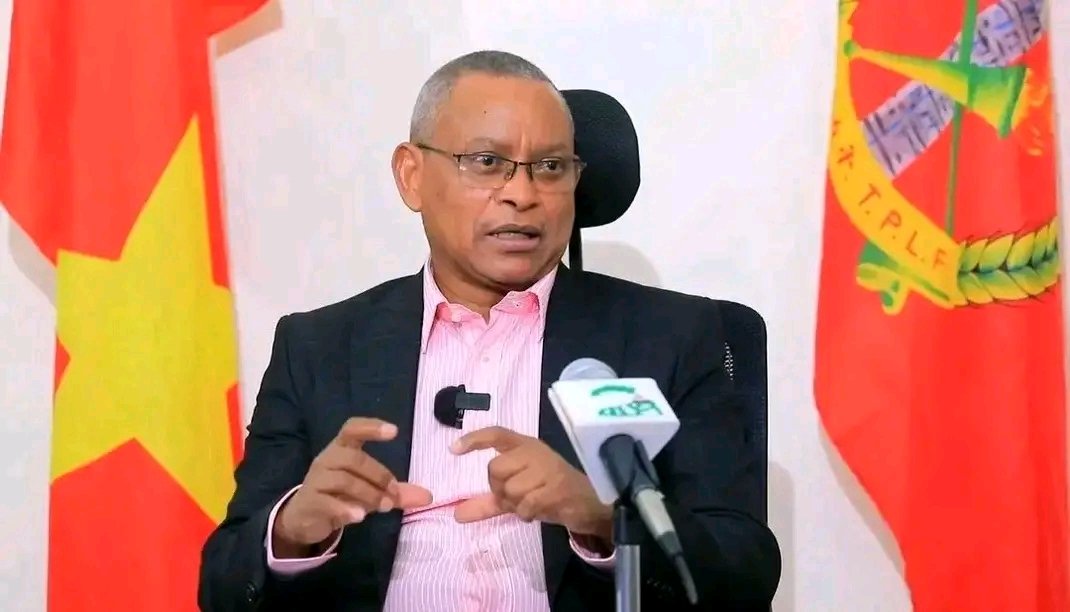
The announcement brings together armed and political forces operating in several of Ethiopia’s most conflict-affected regions, including Tigray, Amhara and Oromia. The alliance includes the Tigray People’s Liberation Front (TPLF), the Amhara Fano National Movement, the Oromo Liberation Army (OLA), and four other organizations representing different regions and communities.
Amanuel Assefa, vice president of the TPLF, told Agence France-Presse (AFP) that the groups had formed an alliance with the objective of removing the current government and facilitating a transitional administration.
The reported members are the Amhara Fano National Movement, the Oromo Liberation Army, the TPLF, the Ogaden National Liberation Front, the Afar Revolutionary Democratic Unity Front, the Benishangul Peoples’ Liberation Movement and the Gumuz Peoples’ Democratic Movement.
The announcement represents a significant development because several of the groups involved have historically had different political objectives, territorial interests and, in some cases, direct or indirect conflicts with one another. Their decision to establish a common framework therefore appears to reflect an effort to prioritize opposition to the federal government over some of their longstanding differences.
From separate insurgencies to broader coordination
The new coalition did not emerge suddenly. During August and September, several opposition groups publicly acknowledged discussions aimed at increasing coordination among armed forces operating in different parts of Ethiopia.
In August, Fano leader Zemene Kassie said different factions of the movement had moved toward a more unified structure and that discussions were underway with other opposition forces. On Sunday, Kassie was reported to have announced the broader coalition and to have assumed its leadership.
The Oromo Liberation Army, however, has previously emphasized that emerging cooperation among opposition forces should not automatically be interpreted as a comprehensive political agreement.
In a September 17 statement, the OLF-OLA High Command described the emerging arrangement as a “procedural consensus,” stressing that no organization had been given a mandate to settle Ethiopia’s fundamental political questions on behalf of the population. It said those questions would ultimately require direct participation by Ethiopians.
That distinction is important. While the latest announcement indicates a more formalized framework than earlier discussions suggested, it remains unclear how far the participating organizations have agreed on issues beyond their common opposition to the federal government.
A coalition of former rivals
The alliance also brings together groups with complicated histories of conflict.
The TPLF fought the federal government in the 2020–2022 Tigray war, while Fano forces fought alongside federal and Eritrean forces during much of that conflict. Fano subsequently became engaged in an armed confrontation with the federal government in Amhara after the government announced measures to reorganize regional and special forces.
The OLA, meanwhile, has been engaged in a prolonged insurgency against the Ethiopian government in Oromia.
The emergence of cooperation among these forces therefore marks a notable shift in Ethiopia’s conflict dynamics. Rather than remaining largely confined to individual regional theaters, opposition groups appear increasingly interested in establishing links that stretch across Ethiopia’s major conflict zones.
But cooperation does not necessarily mean that the groups have resolved their underlying disagreements.
The OLA, for example, recently distinguished between broader opposition coordination and an armed faction operating in Wollega under the Fano name. The group has called for greater clarity over the relationship between that faction and the wider Fano movement.
Tigray adds another layer of uncertainty
The announcement comes at a particularly sensitive moment in Tigray.
Tensions between the federal government and the TPLF have increased in recent months, with both sides reported to have deployed forces near the region. The renewed military buildup has raised concerns about the possibility of renewed fighting following the 2022 Pretoria Agreement, which ended the two-year Tigray war.
The federal government also recently announced that nearly 300 TPLF fighters had surrendered and that weapons and ammunition had been handed over. Assefa declined to comment to AFP on military matters.
The simultaneous emergence of a national opposition alliance and renewed tensions around Tigray could significantly complicate Ethiopia’s already fragile security environment.
The challenge of turning an alliance into a political force
The most important question surrounding the new coalition is not simply whether the participating groups can coordinate militarily, but whether they can develop a coherent political framework.
The organizations represent different constituencies and have distinct historical grievances and political priorities. Their ability to maintain cooperation will depend in part on whether they can establish mechanisms for decision-making, resolve disputes between their respective forces and agree on what would happen if the existing federal government were to undergo a political transition.
The stated objective of establishing a transitional government provides a broad common denominator, but it leaves unanswered questions about the composition of such a government, the constitutional order that would follow, the status of regional administrations, territorial disputes and the role of armed groups in a future political settlement.
The OLA’s recent statement underscores precisely this problem: opposition cooperation, in its view, should create conditions for a political process rather than allow any individual organization to determine Ethiopia’s future on behalf of the wider population.
A potentially wider conflict landscape
The announcement also comes as violence continues in several parts of the country.
Amhara remains affected by fighting between Fano forces and government and regional security forces, while armed conflict involving the OLA continues in parts of Oromia. At the same time, tensions in Tigray have raised concerns about another confrontation between TPLF-aligned forces and the federal government.
This creates the possibility of a more interconnected conflict environment in which developments in one region could increasingly influence security calculations in another.
For the federal government, the emergence of a coalition spanning several regions presents a different challenge from dealing with individual insurgencies separately. For the opposition groups, however, the alliance also carries substantial challenges: maintaining unity among organizations with competing political interests, preventing clashes between their respective forces and translating military coordination into a credible political project.
What happens next?
The formation of the coalition does not by itself establish that the participating groups have created a unified military command or a fully developed political alternative to the federal government. Public statements from the organizations themselves indicate that important differences remain.
What has changed is the apparent scale of coordination.
For years, Ethiopia’s armed conflicts have largely been treated as separate regional crises involving different actors and grievances. The new alliance signals an attempt by several of those actors to connect their struggles within a broader national framework.
Whether that framework develops into a durable political and military coalition will depend on its ability to overcome longstanding rivalries, clarify its command and decision-making structures, and articulate a political roadmap beyond the shared objective of removing the current government.
For now, the announcement marks one of the clearest indications yet that Ethiopia’s fragmented armed opposition is attempting to transform regional insurgencies into a broader national challenge to the federal government.